Golden Metamorphosis
การกำเนิดใหม่
2025
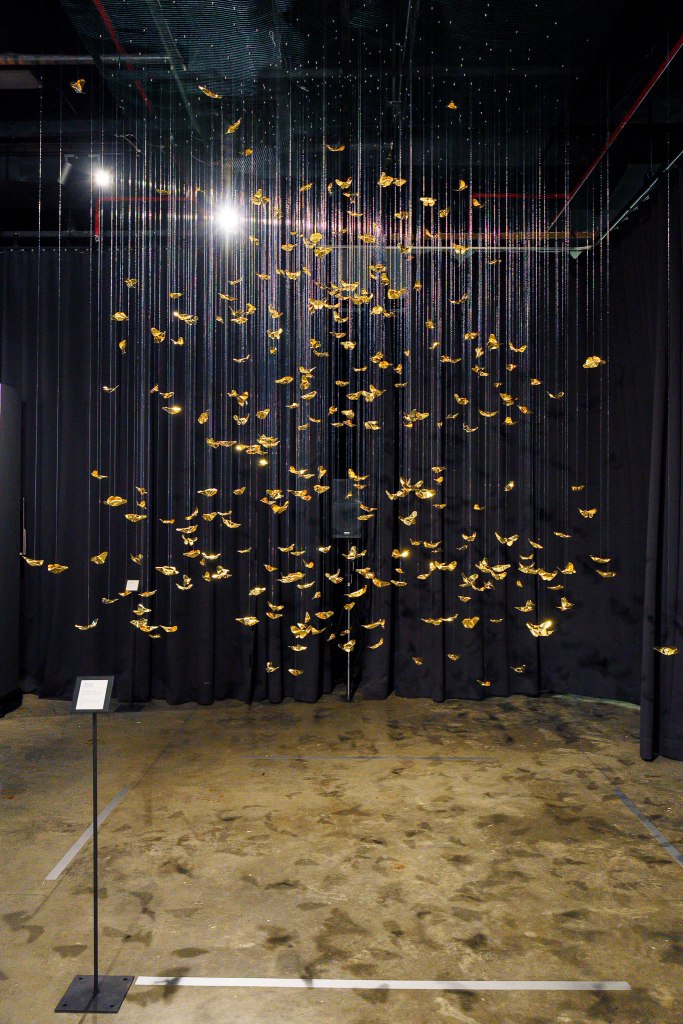
Suspended Sculpture (Folded brass sheet, Nylon wire, Light)
240 x 250 x 250 cm.
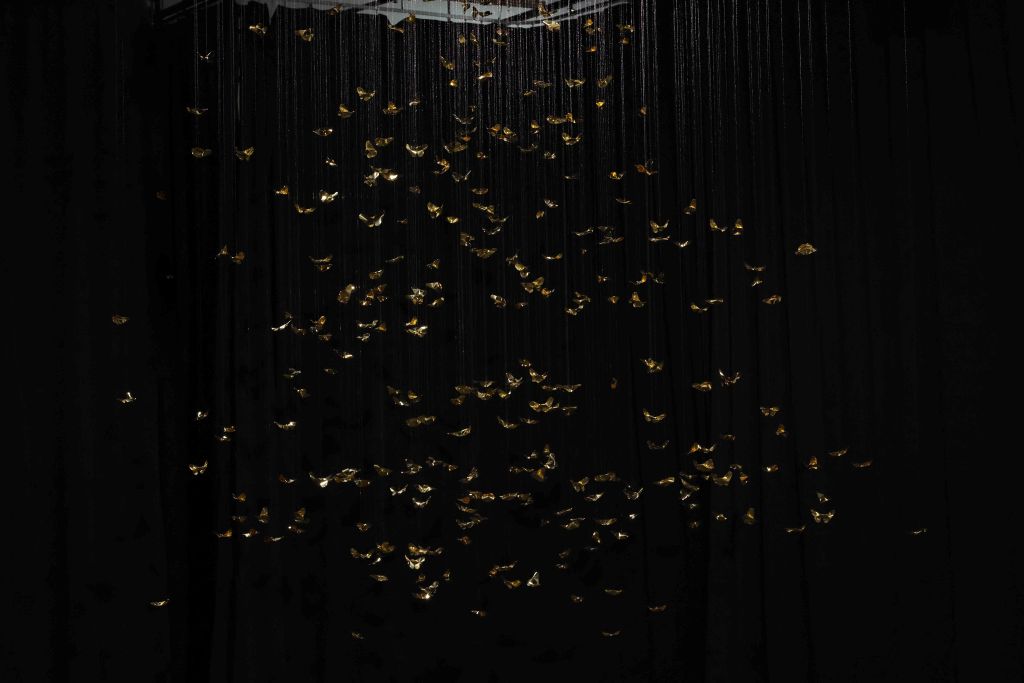
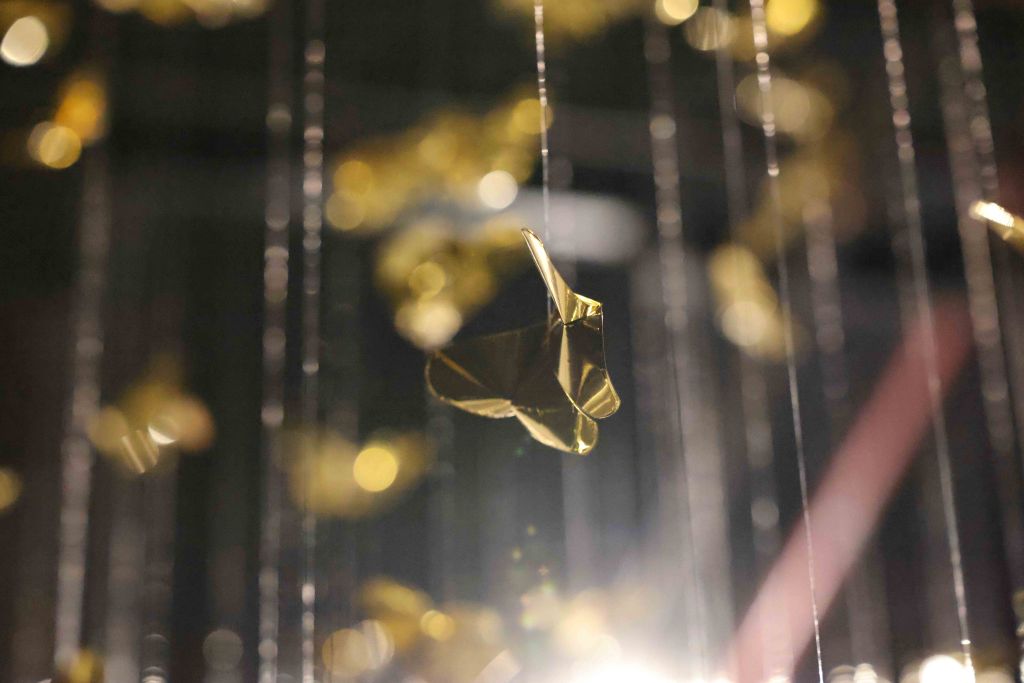
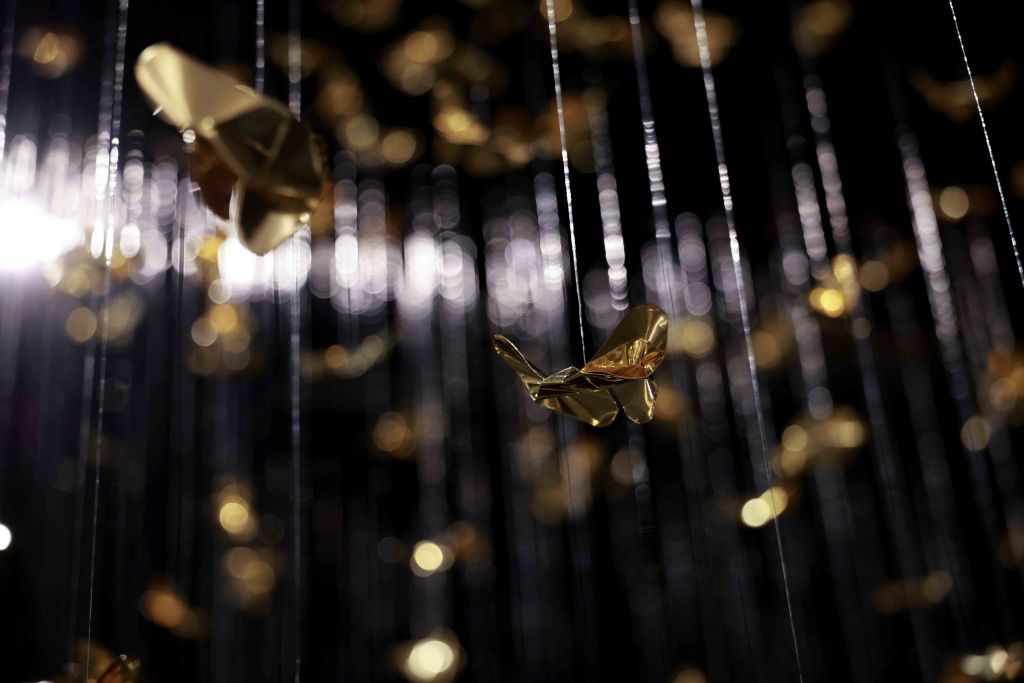
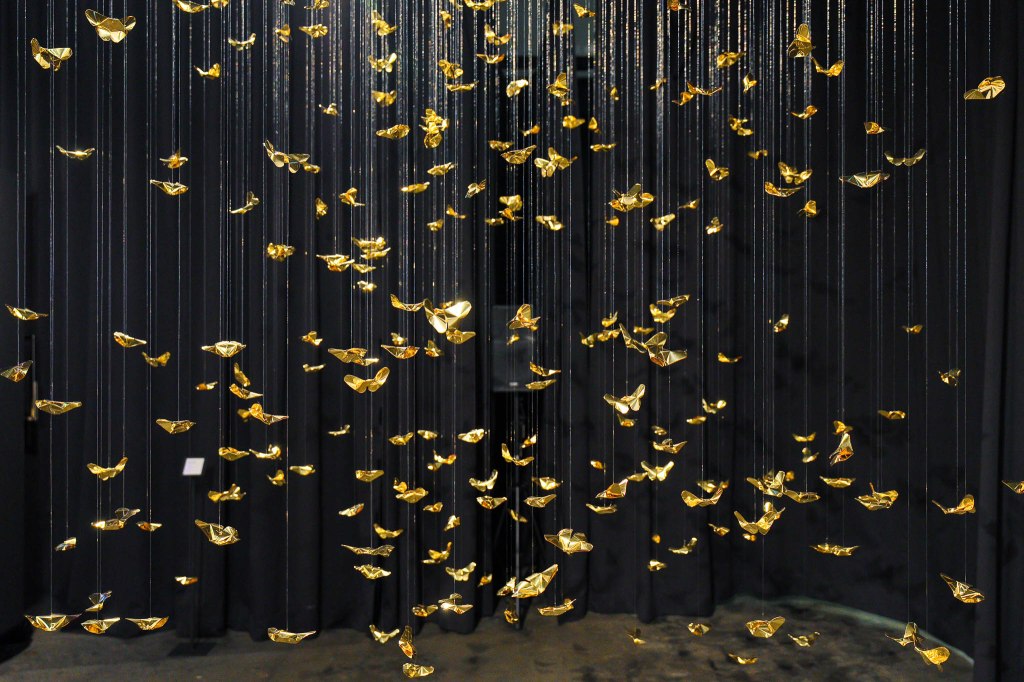
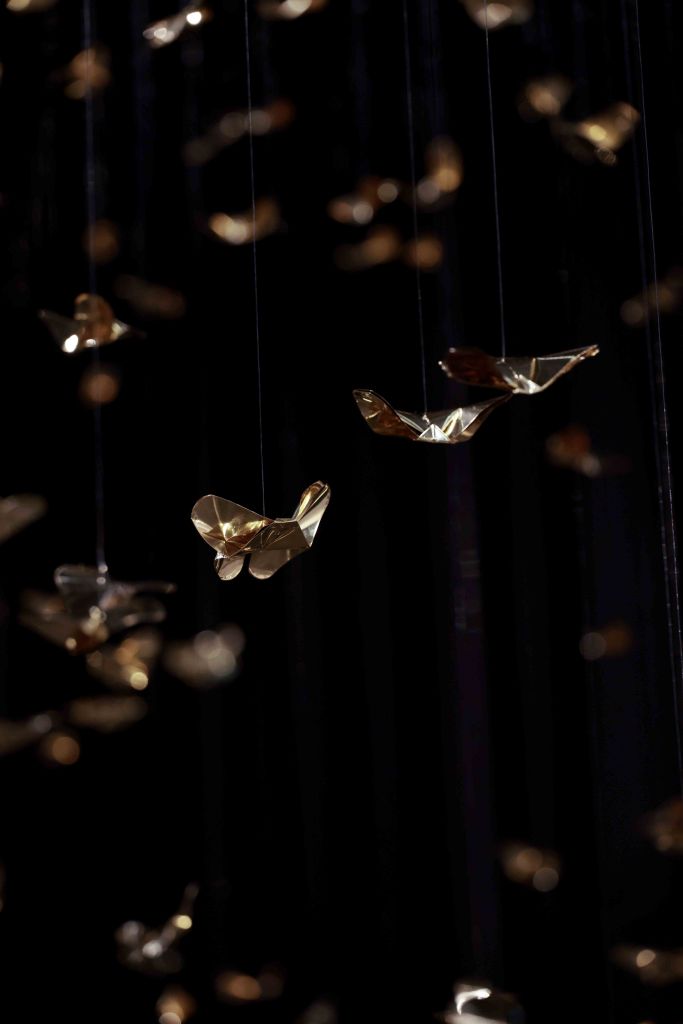
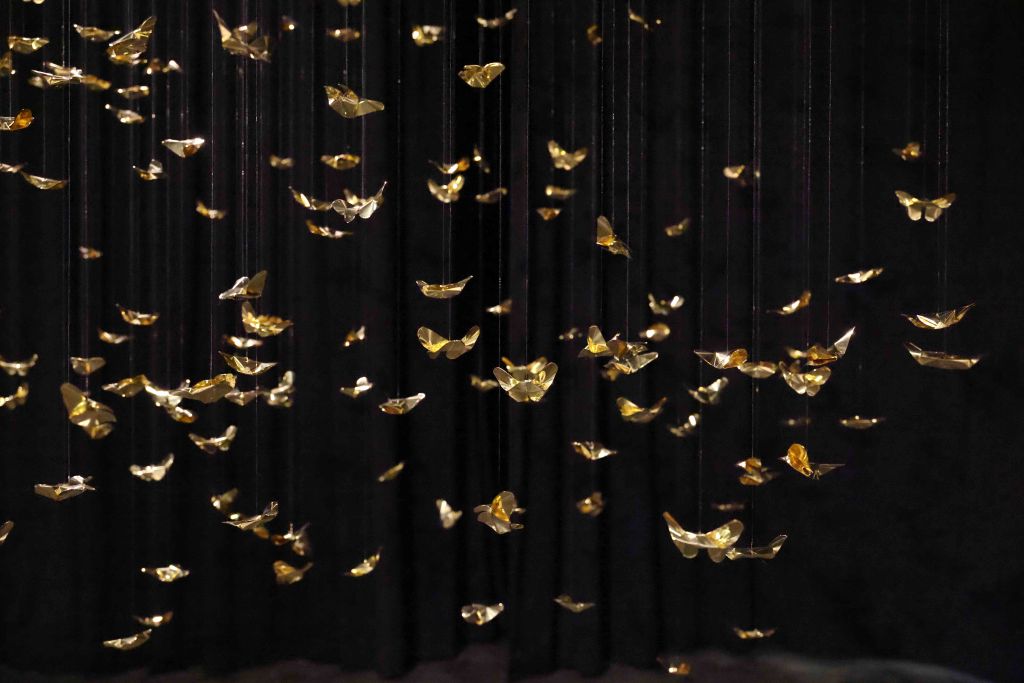
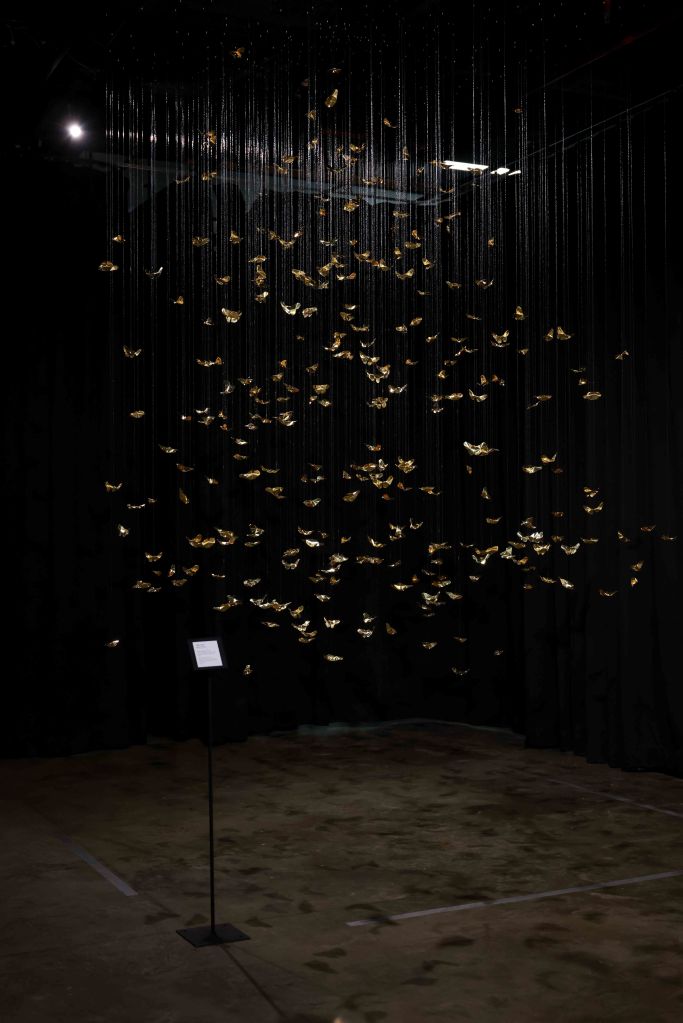
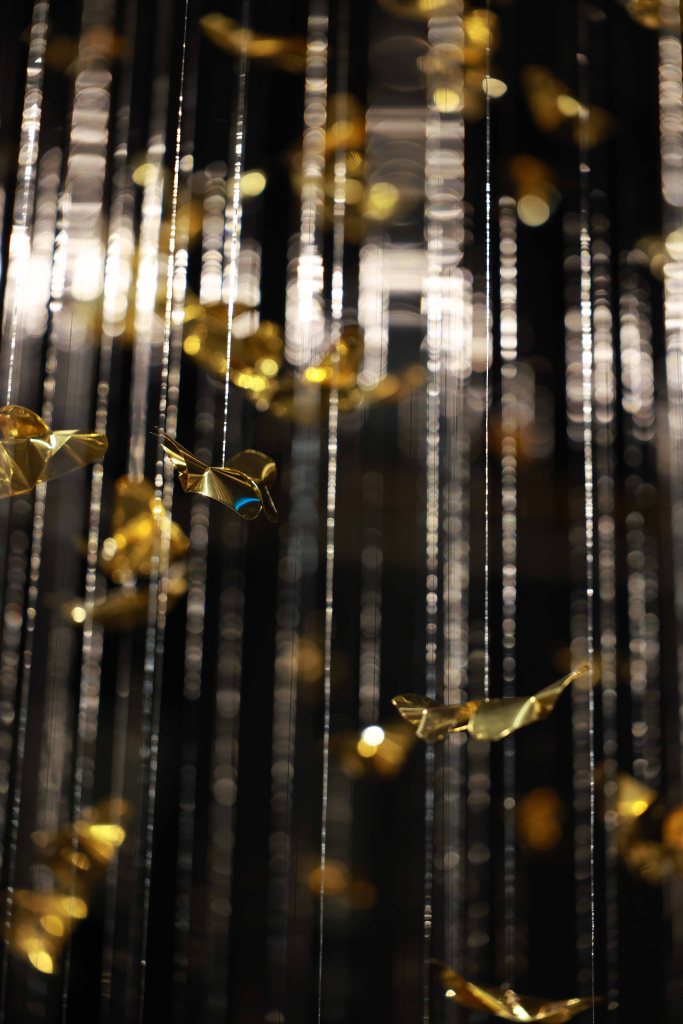
“Golden Metamorphosis” คือประติมากรรมจัดวางแบบแขวนลอย (Suspended Sculpture) ที่สำรวจกระบวนการเยียวยาและการหลอมรวมเศษเสี้ยวของจิตวิญญาณให้กลับคืนสู่สภาวะแห่ง “ความเป็นหนึ่งเดียว” (Oneness) ผลงานชิ้นนี้ตั้งคำถามถึงการแตกสลายและการกำเนิดใหม่ ในฐานะเงื่อนไขพื้นฐานของการดำรงอยู่ ผ่านภาษาทางศิลปะที่ผสานการพับแผ่นทองเหลืองขึ้นรูปด้วยมือเข้ากับหลักปรัชญาและภูมิปัญญาแห่งล้านนา
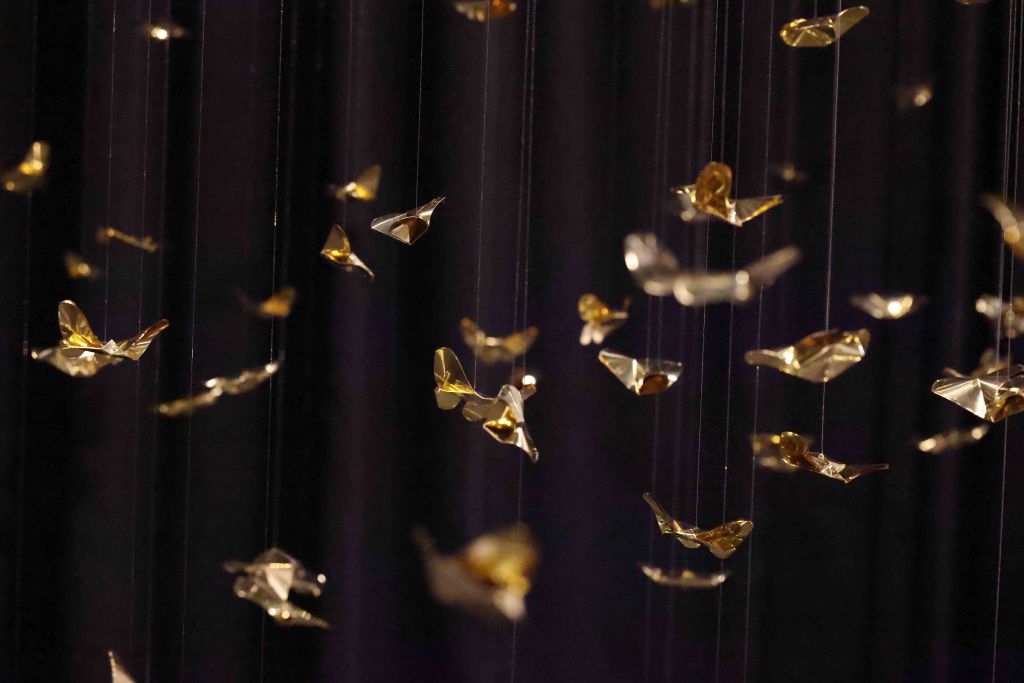
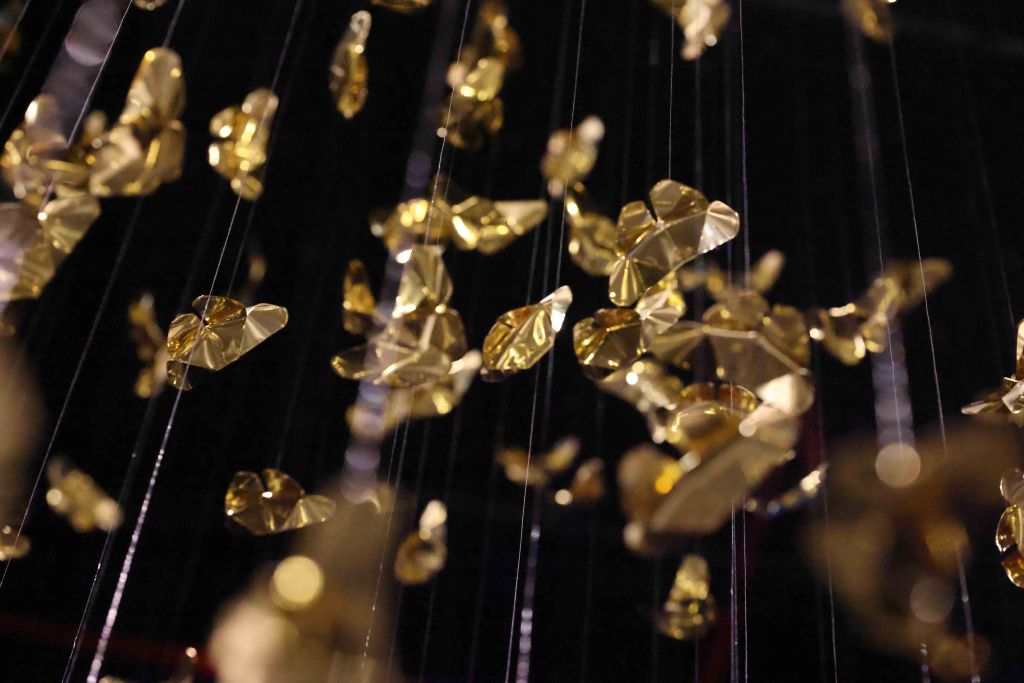
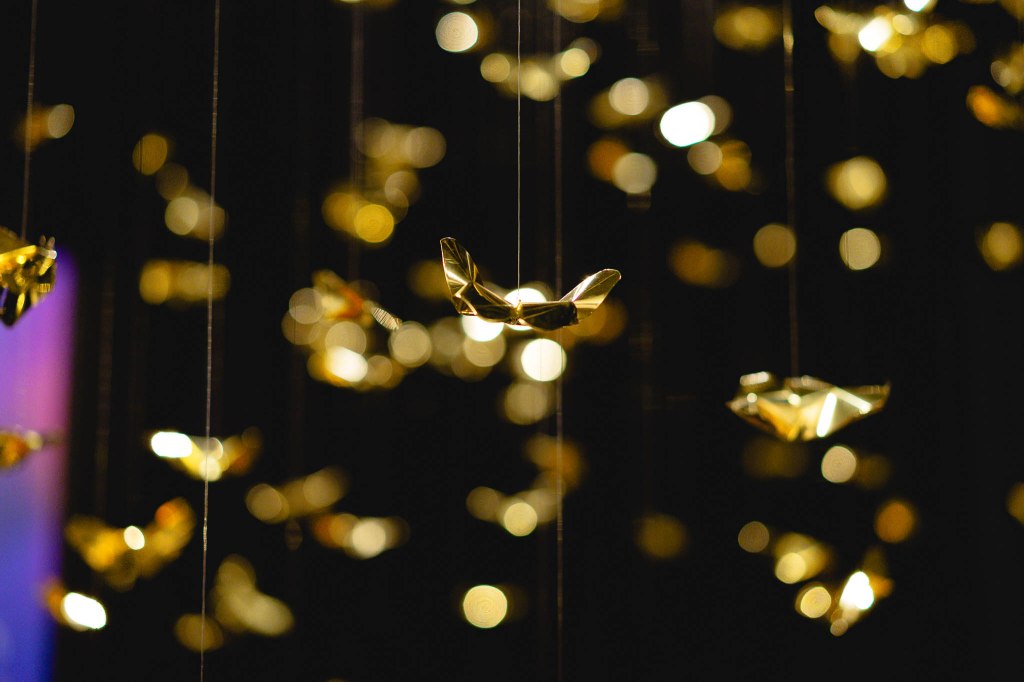
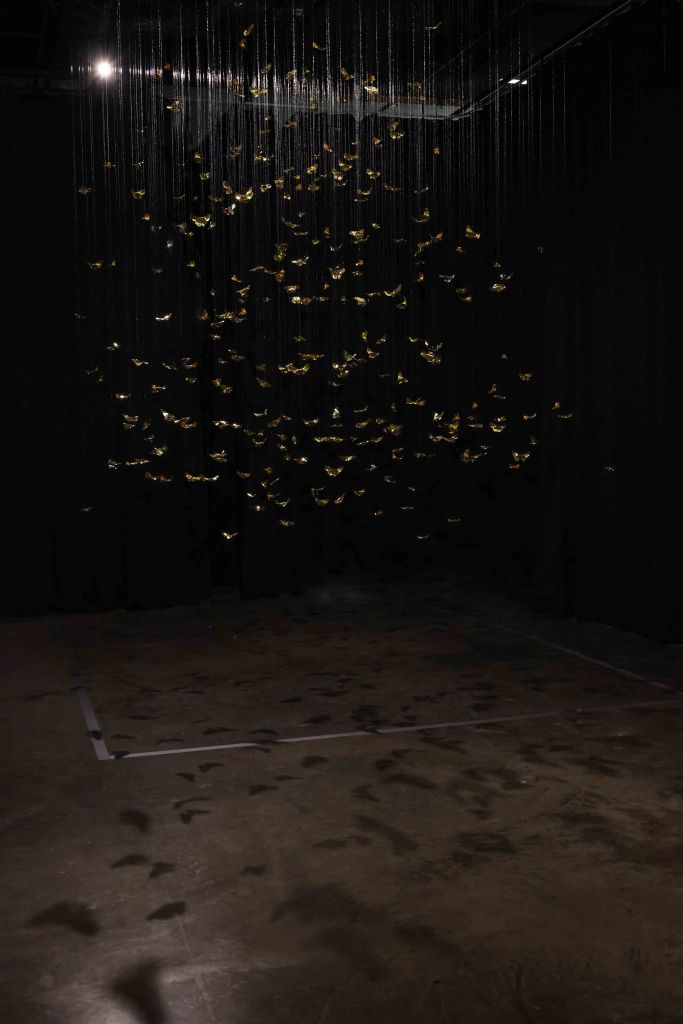
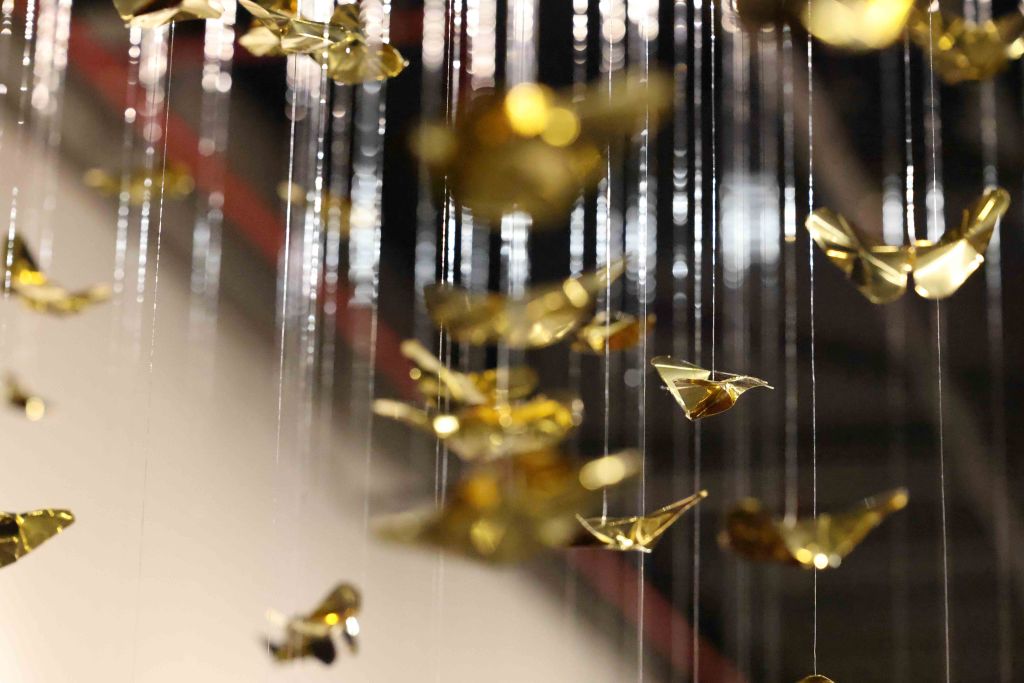
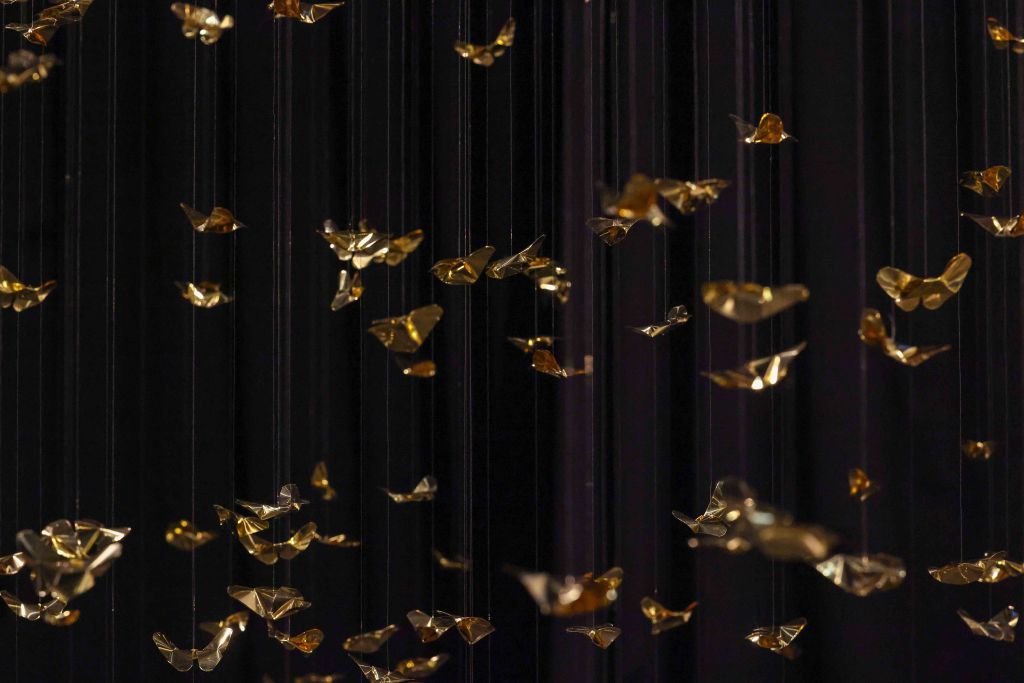
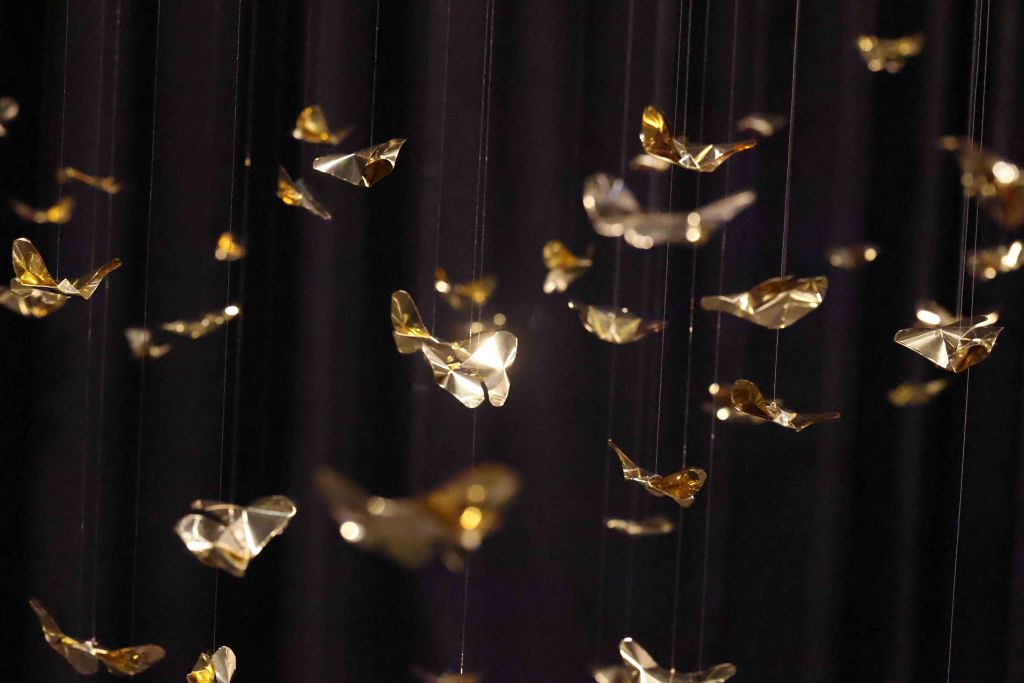
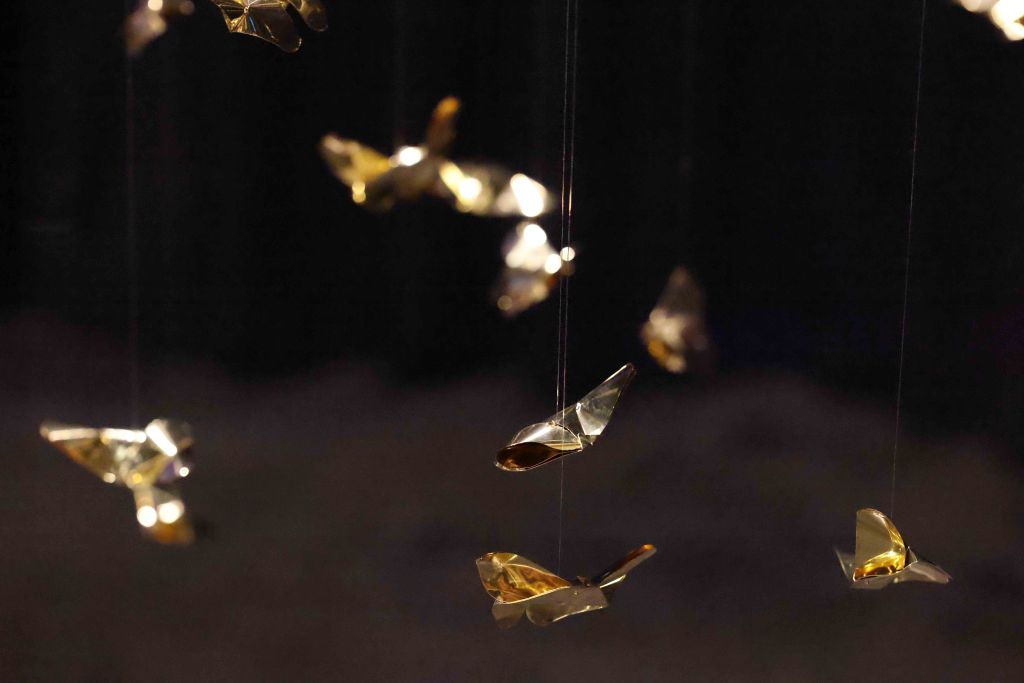
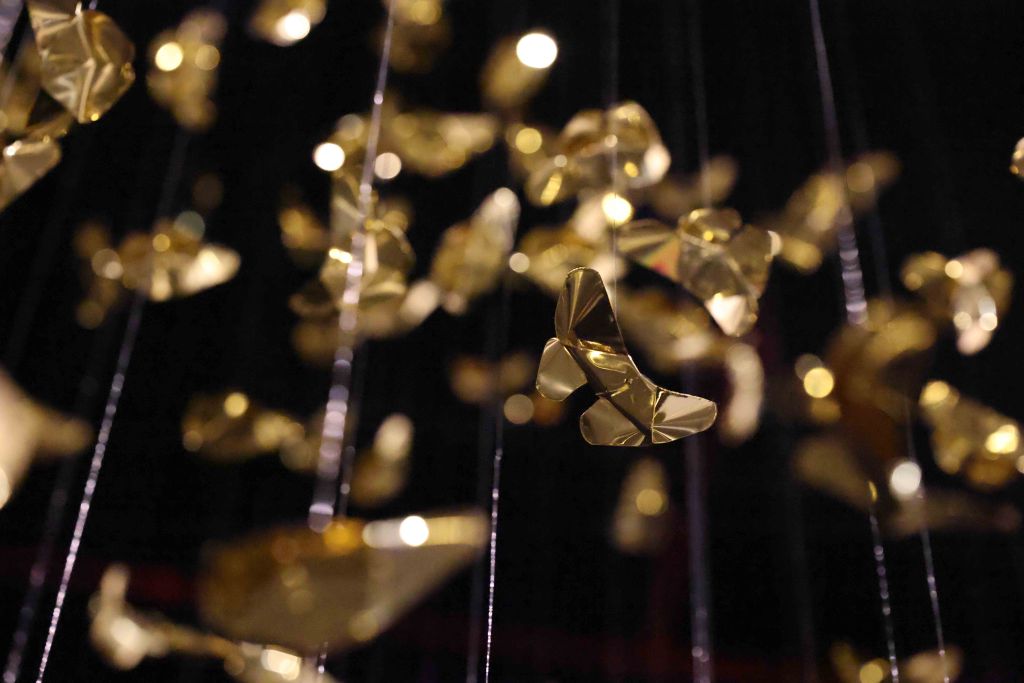
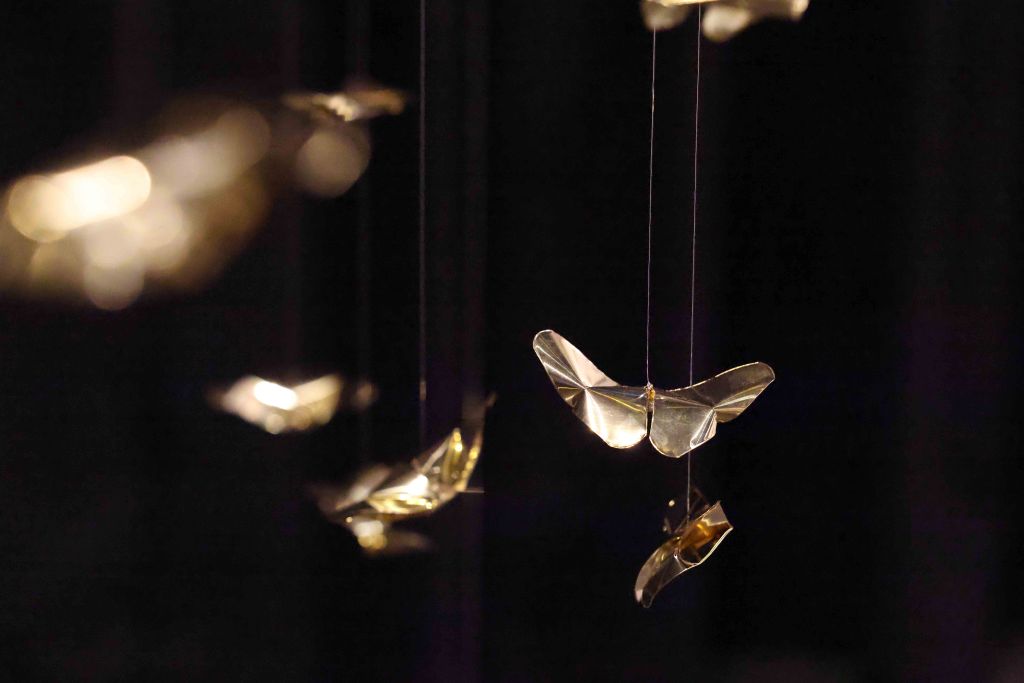
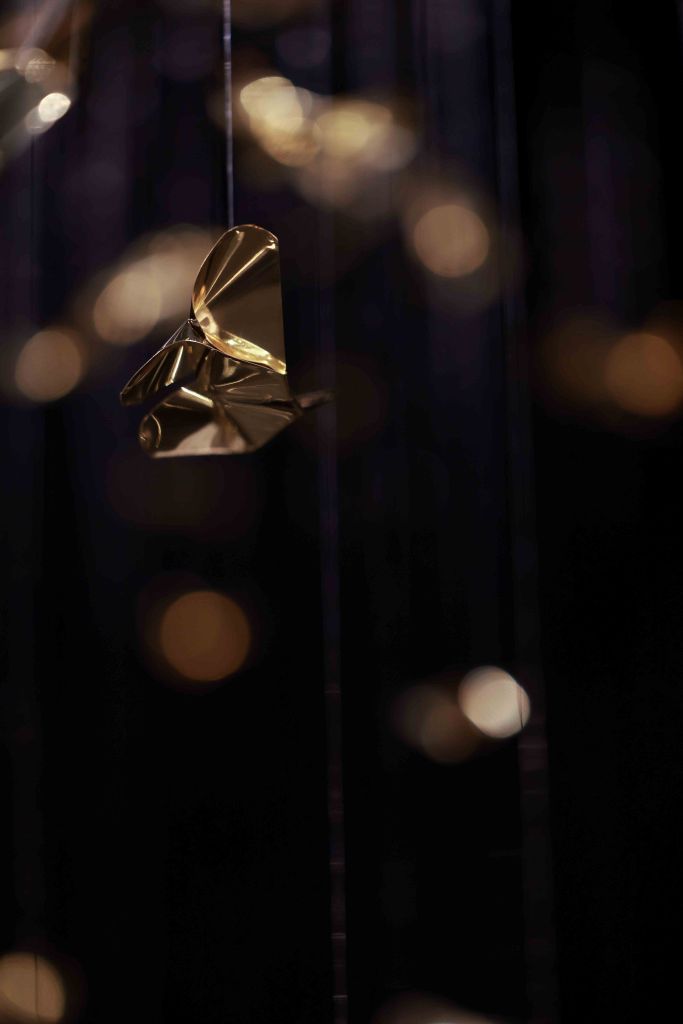
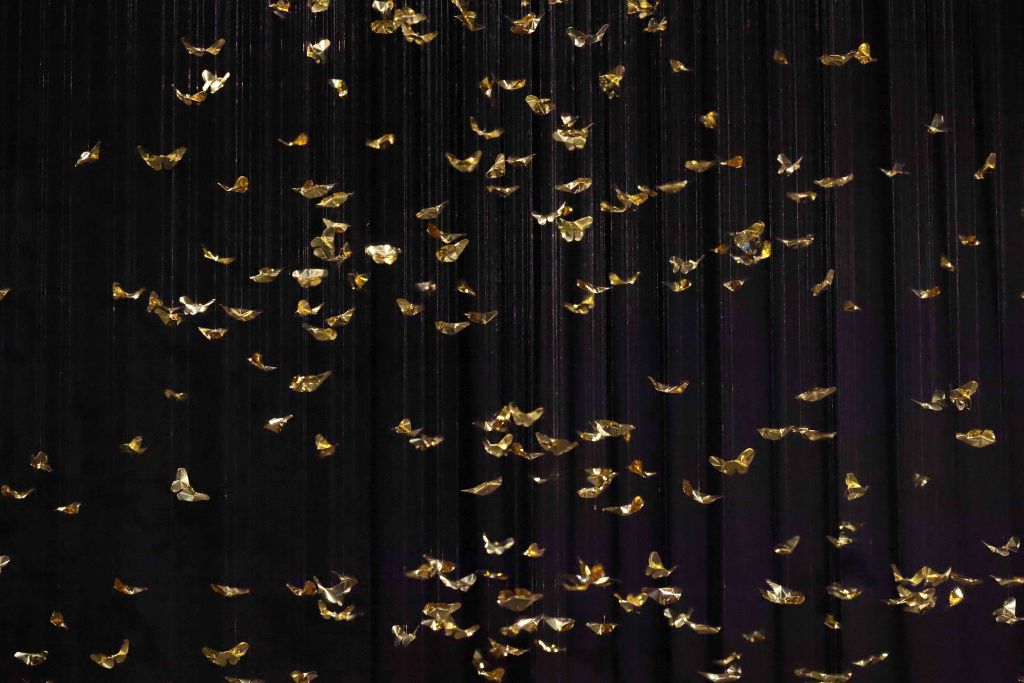
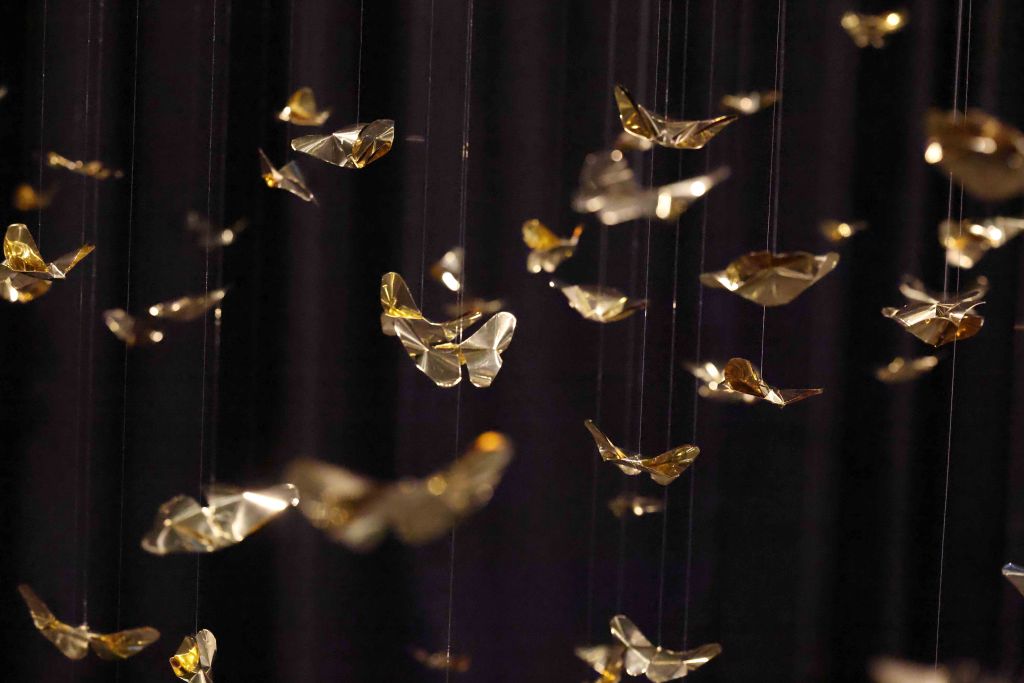
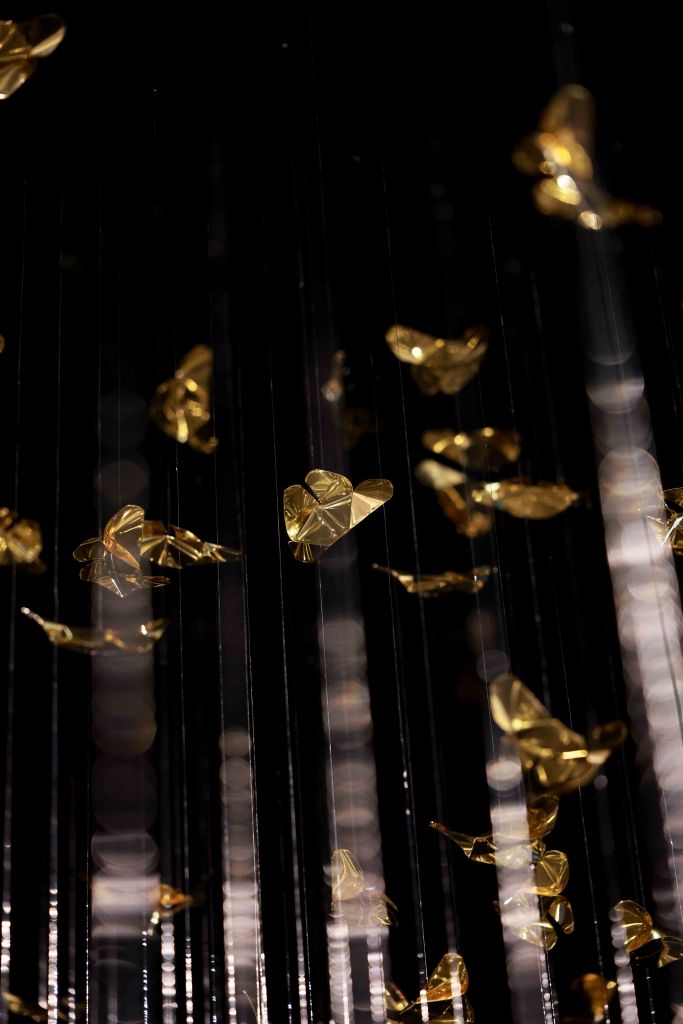
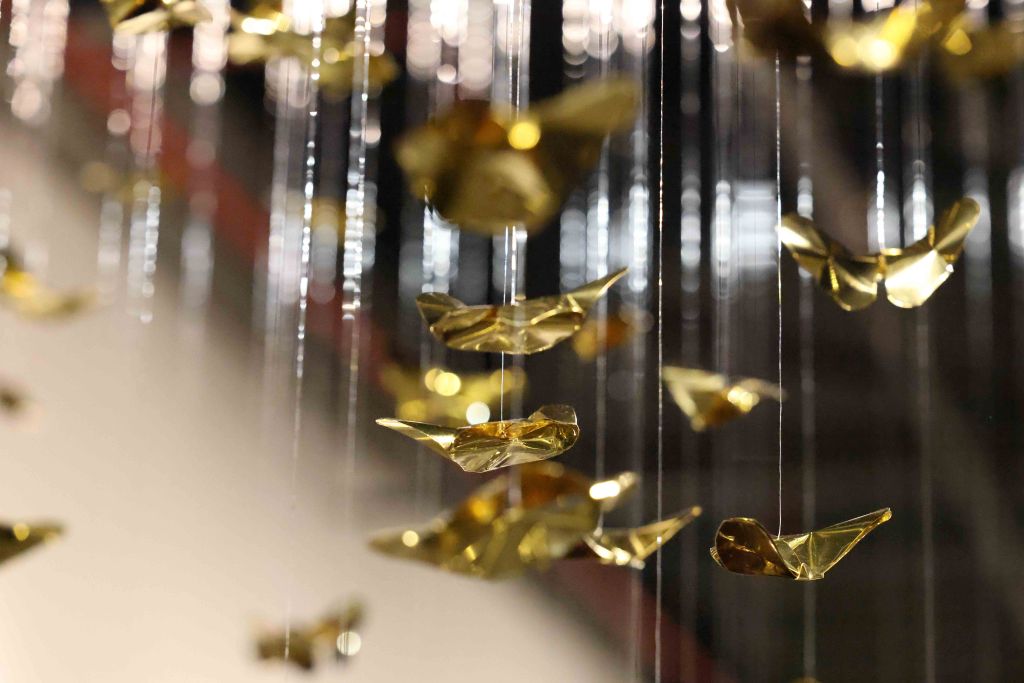
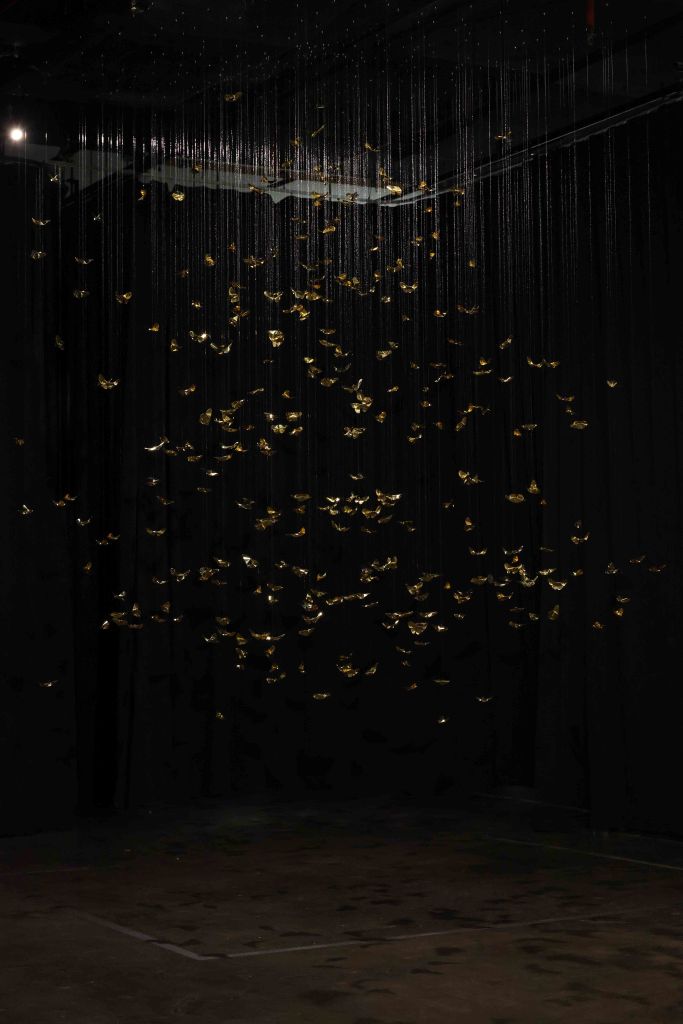
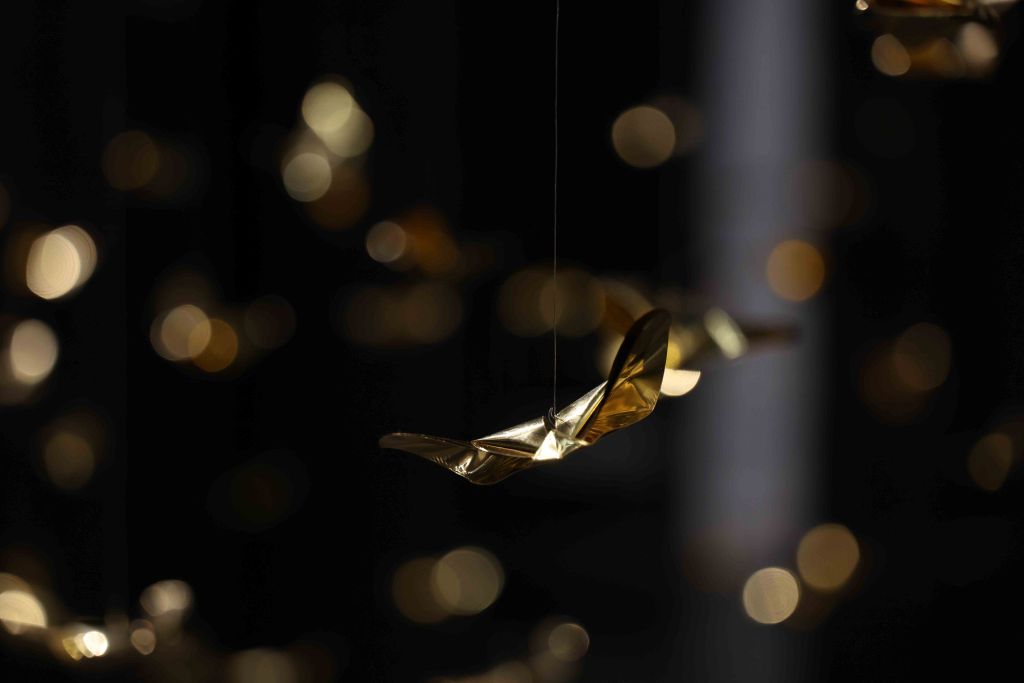
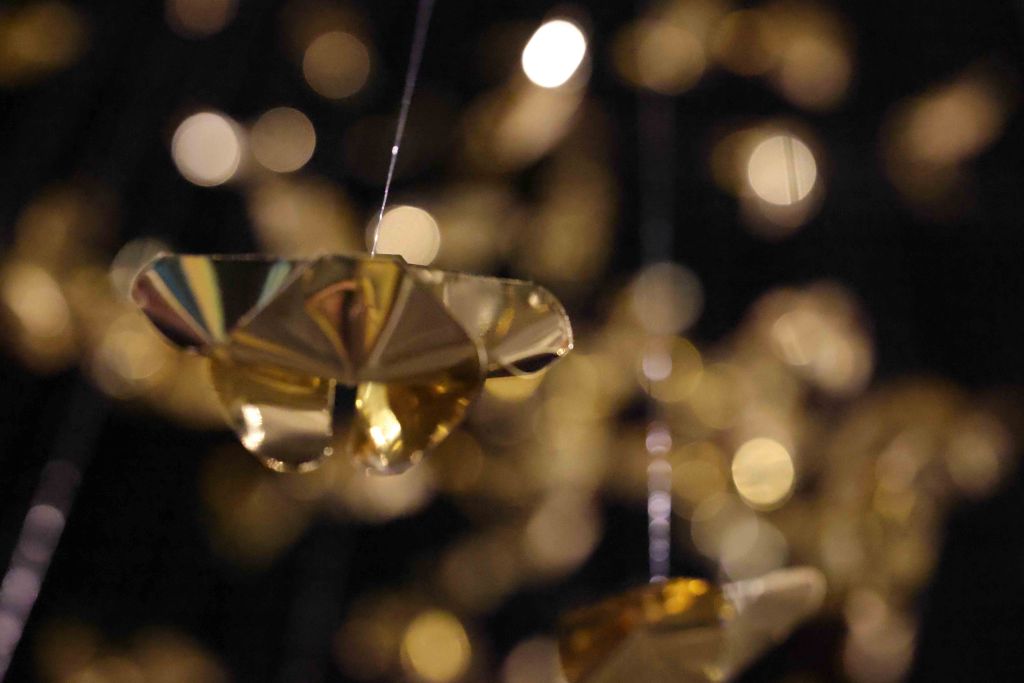
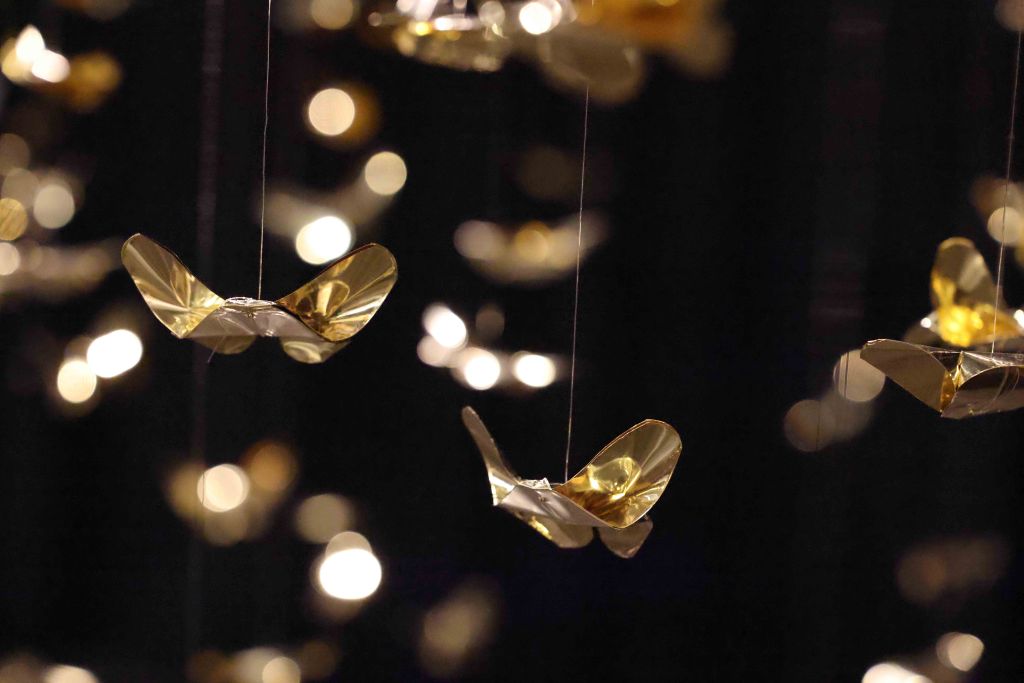
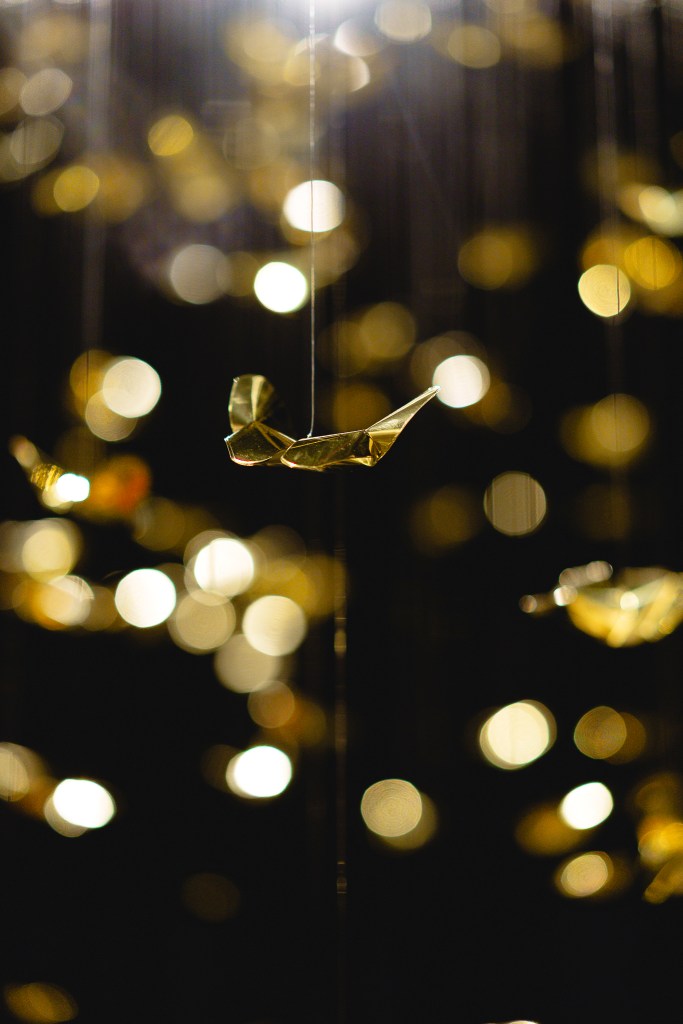
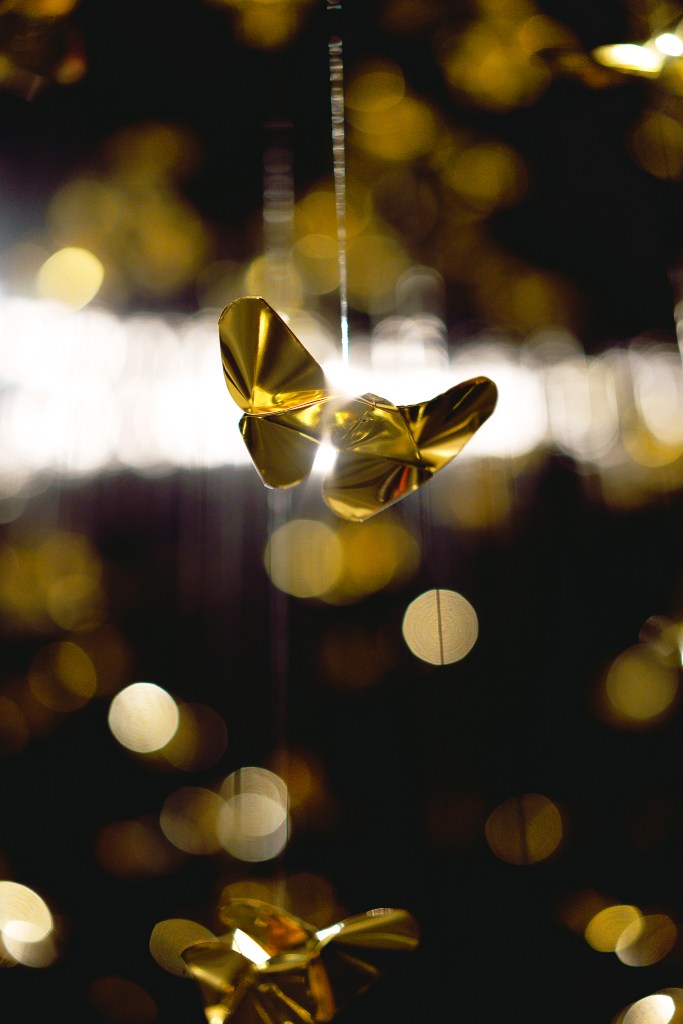
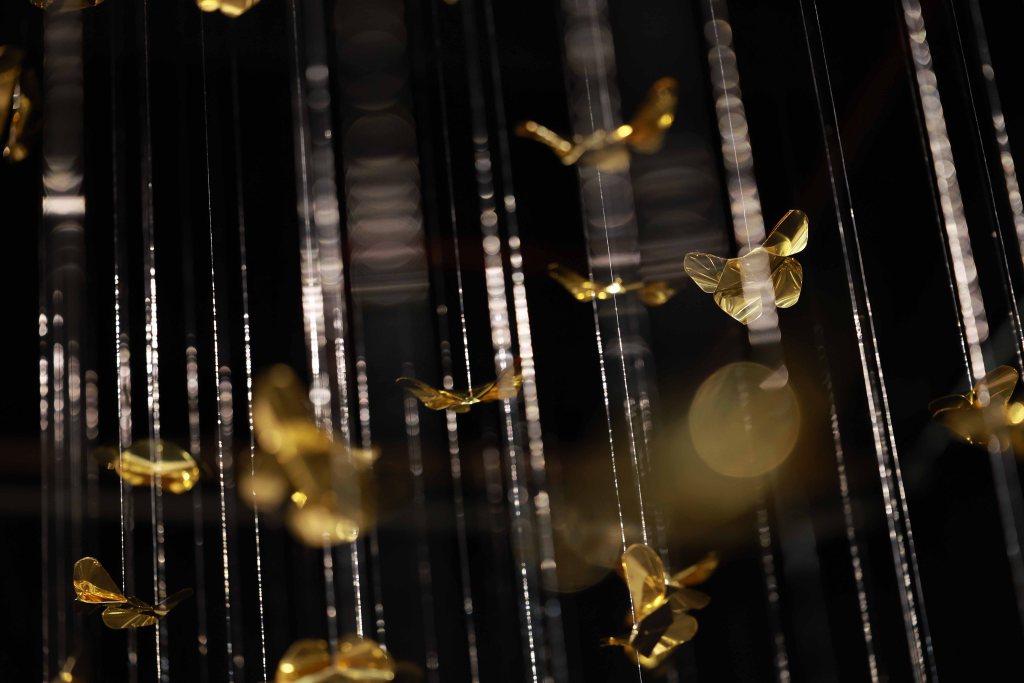
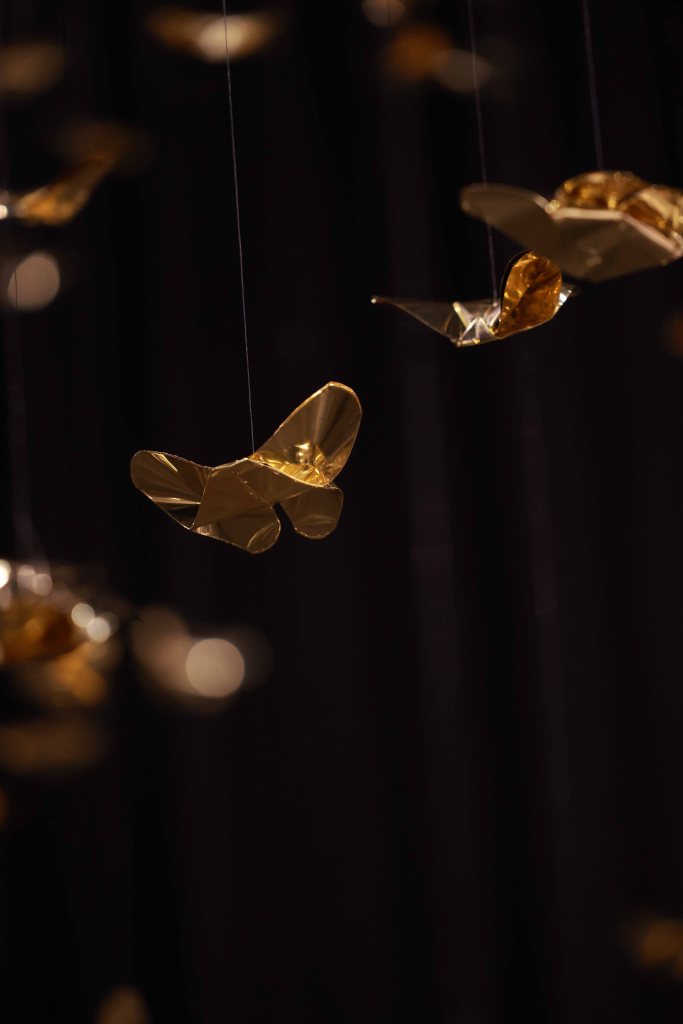
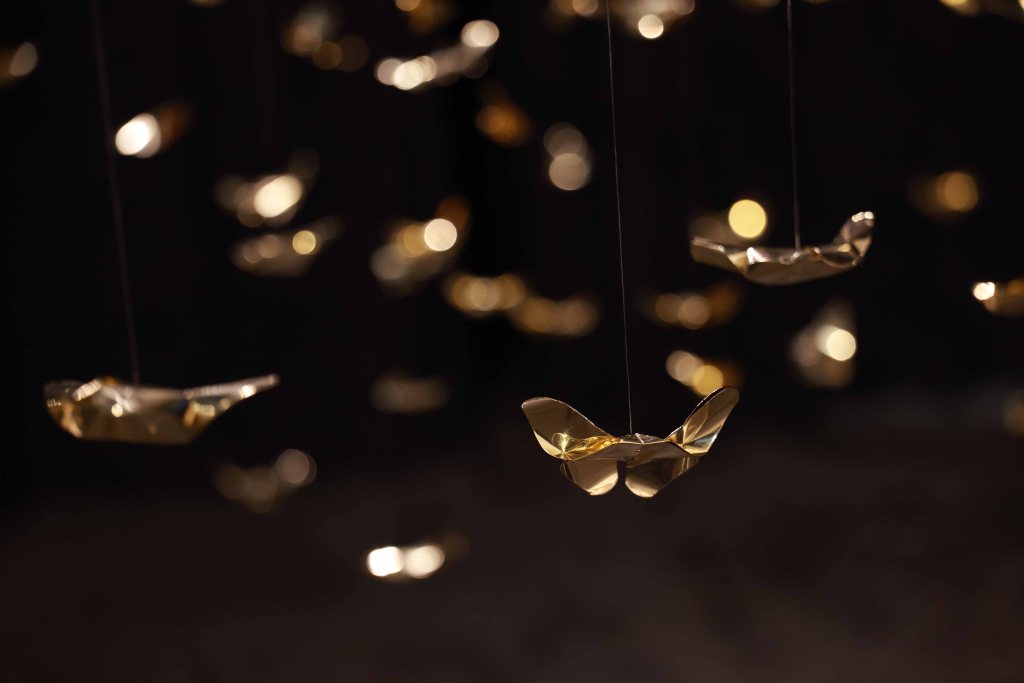
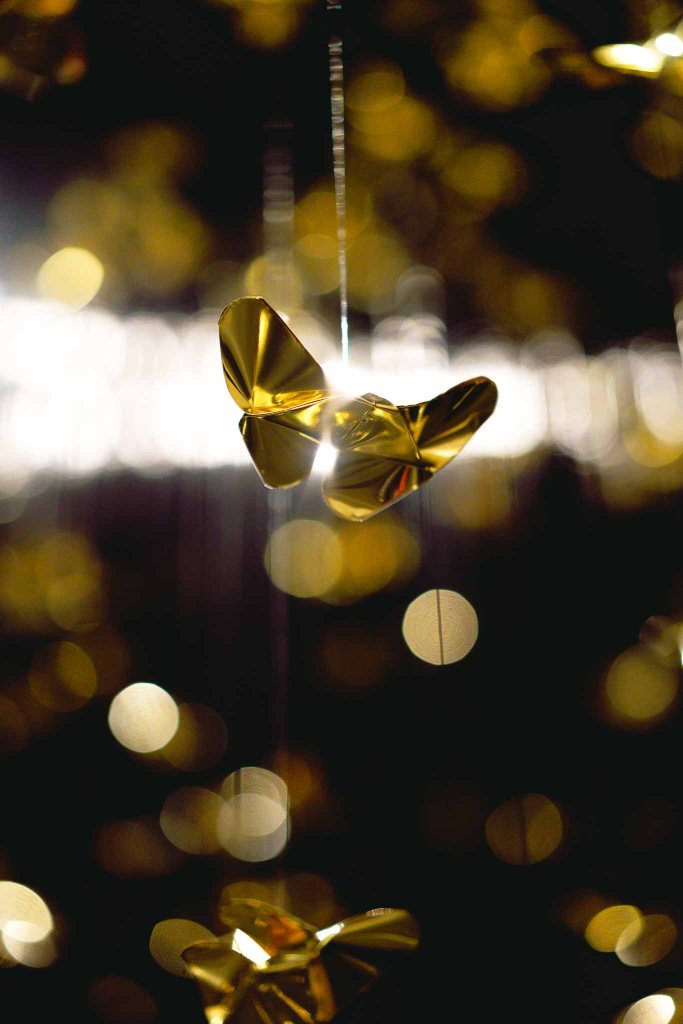
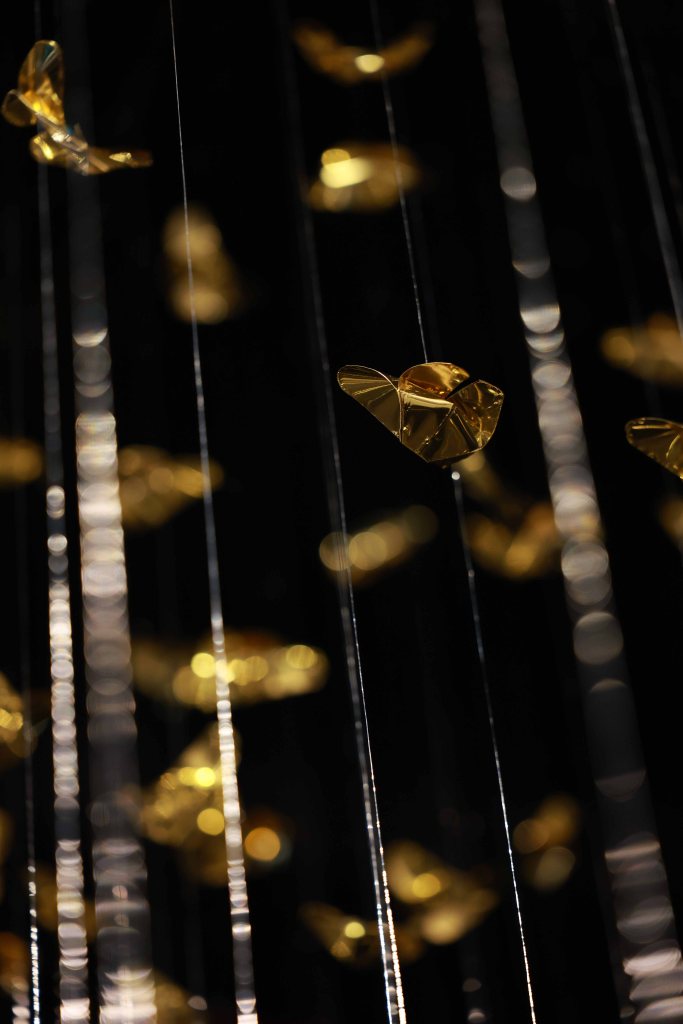
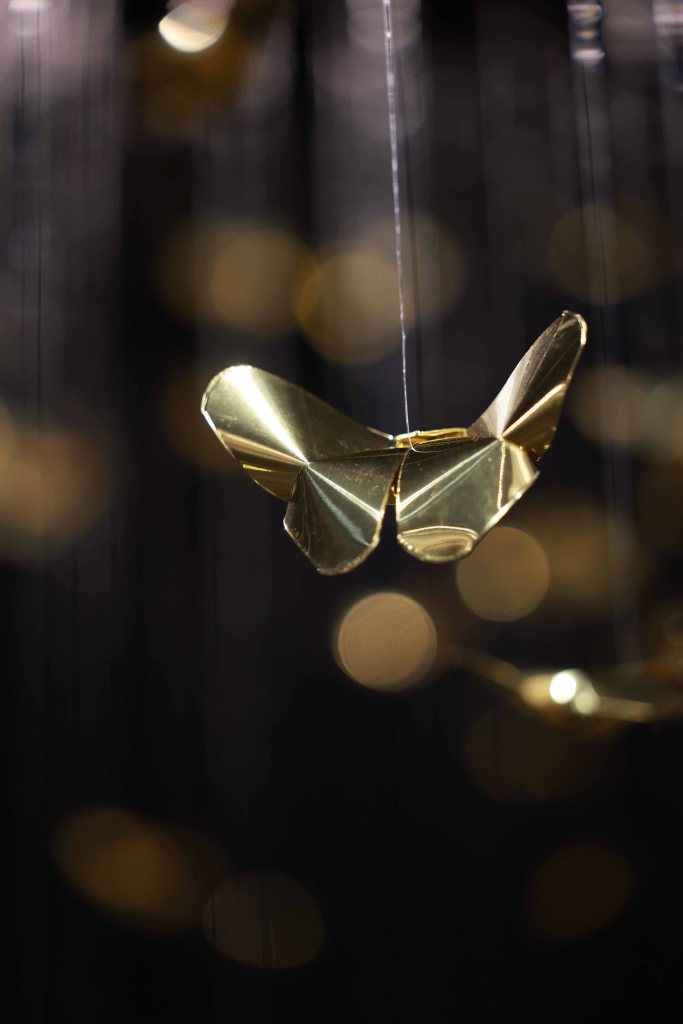
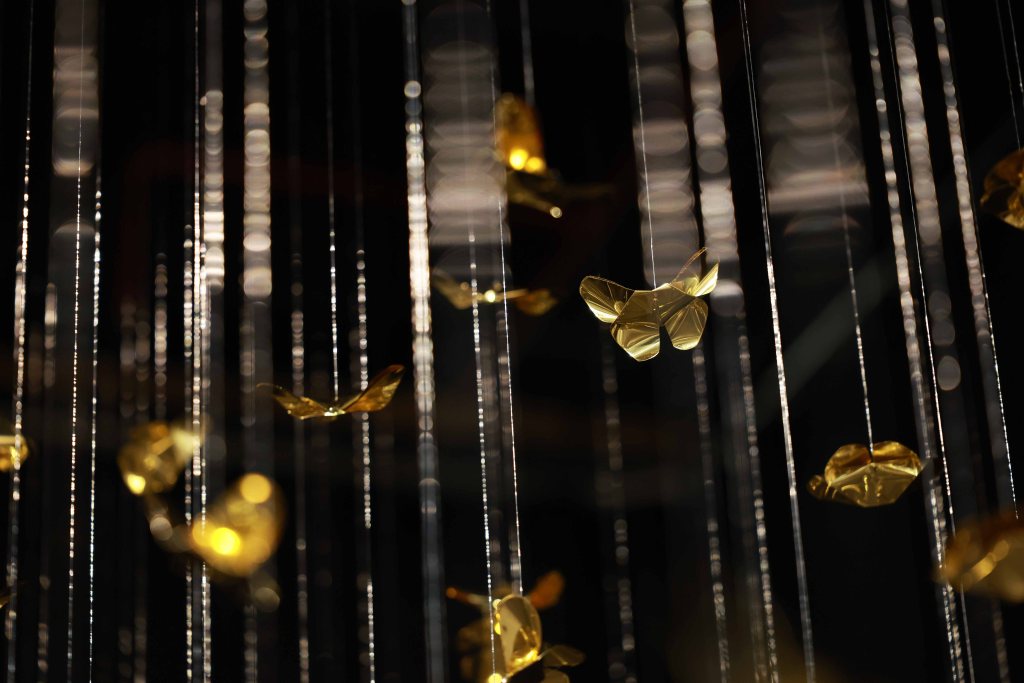
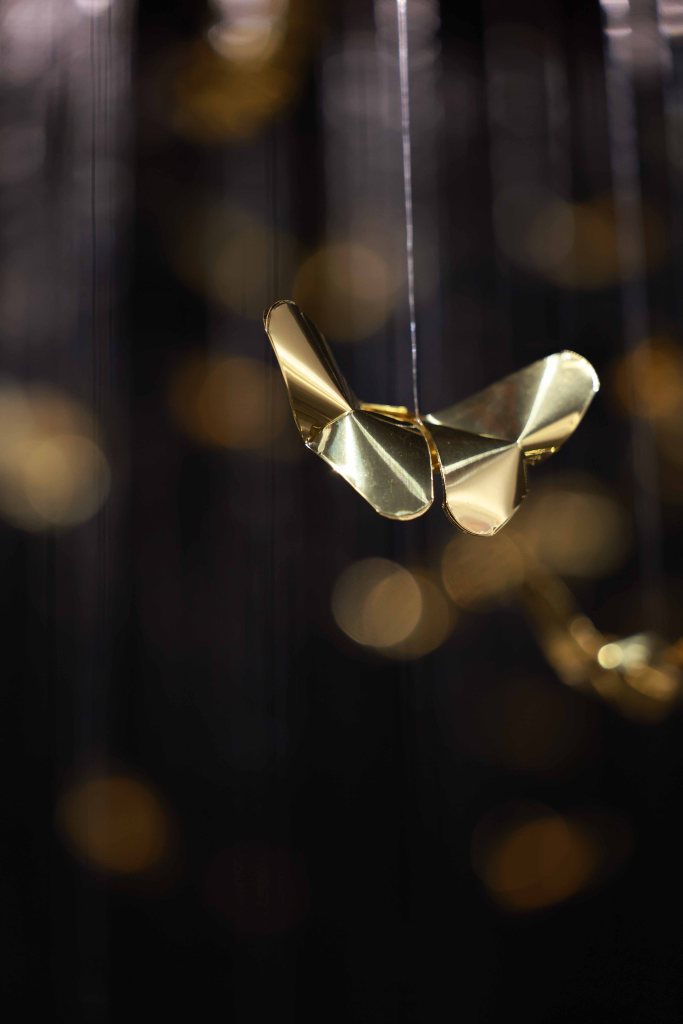
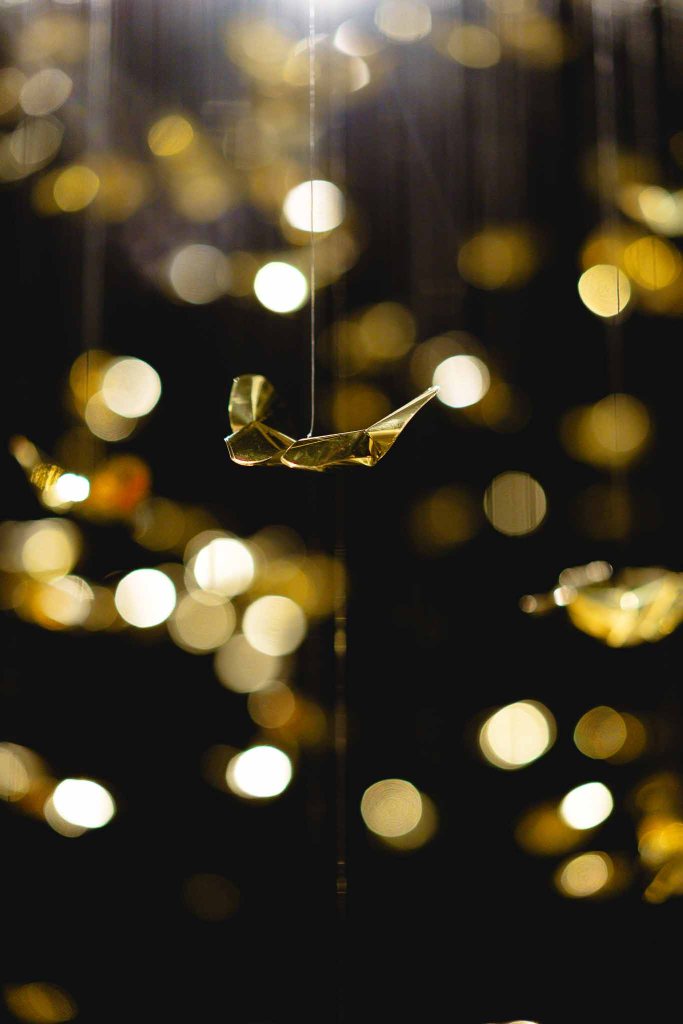
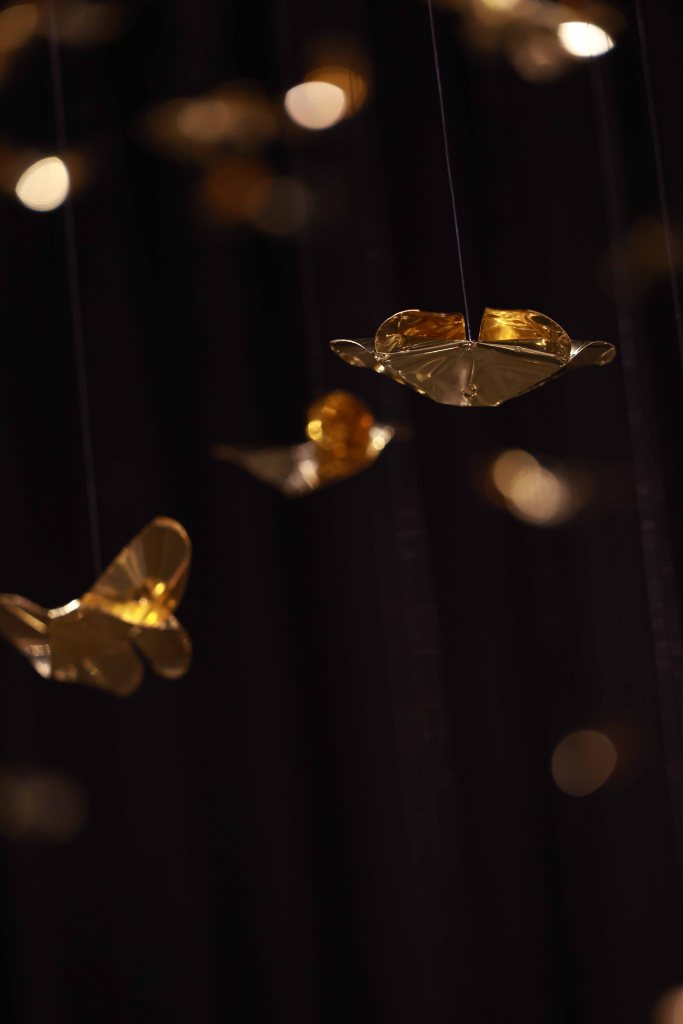
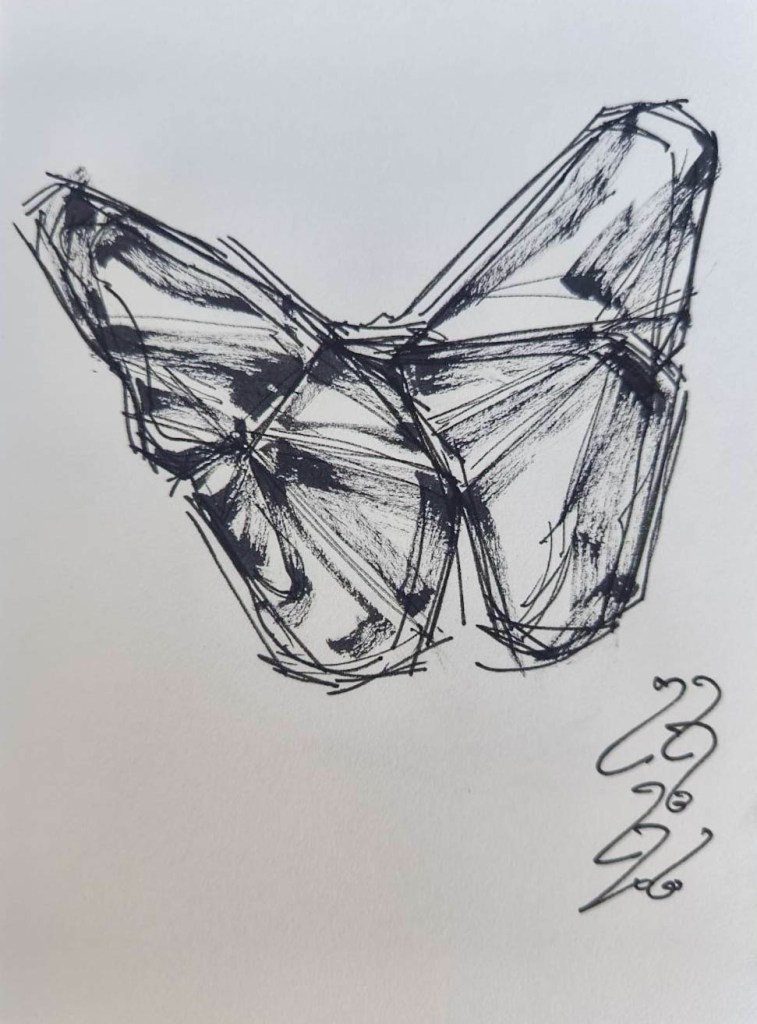
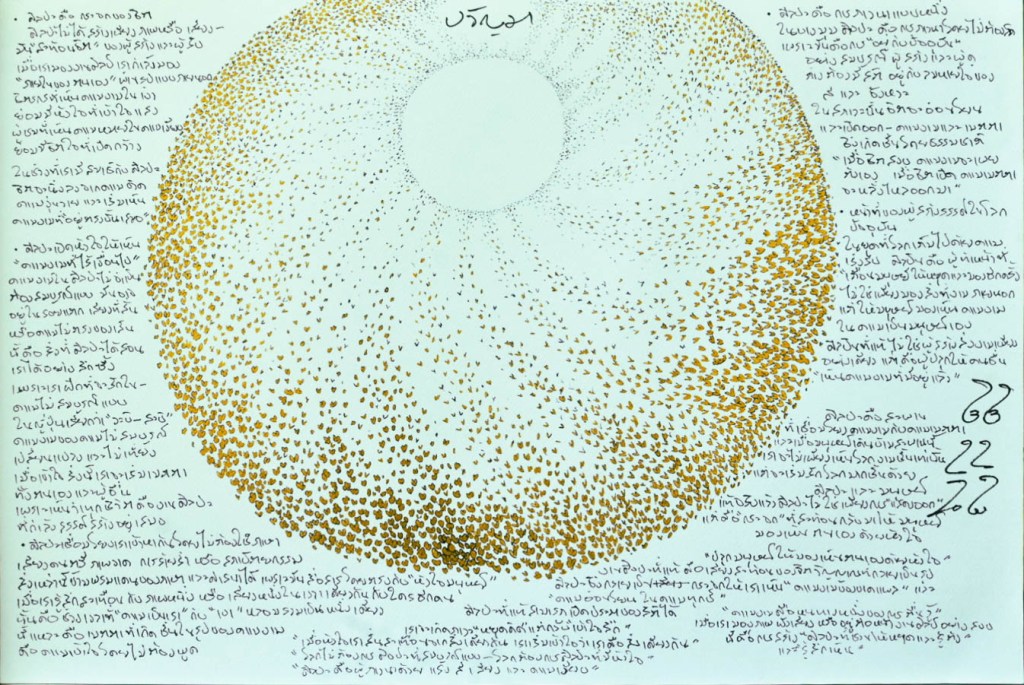
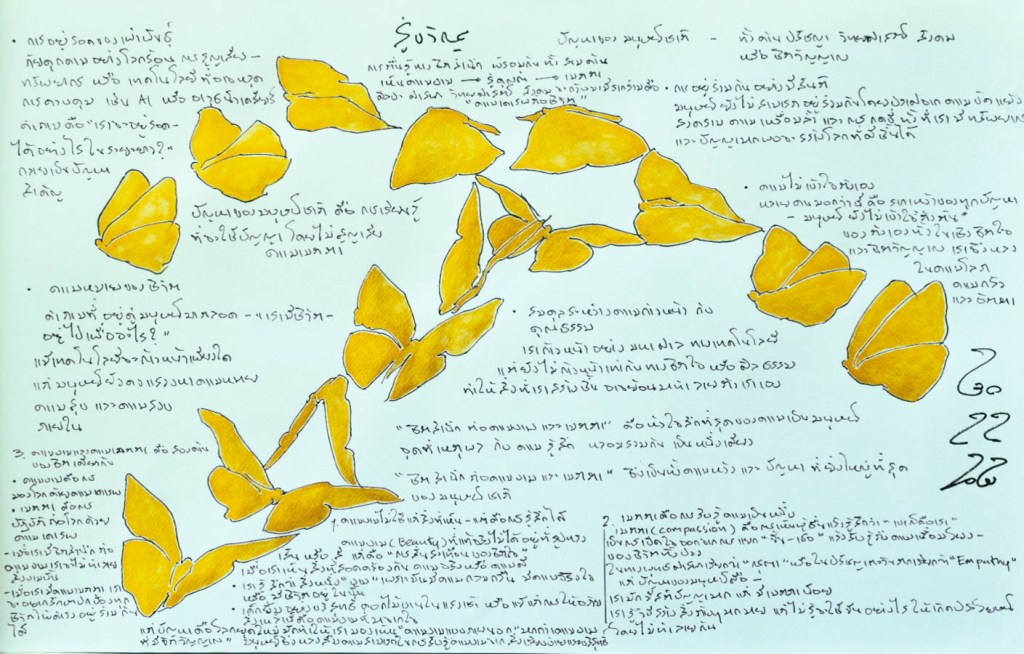
แรงบันดาลใจหลักของผลงานก่อตัวขึ้นจากประสบการณ์ส่วนตัวของศิลปินที่เผชิญกับภาววิตกกังวล (Panic Disorder) สภาวะดังกล่าวเปรียบได้กับการที่ “ขวัญ” หรือพลังงานชีวิตตามคติความเชื่อล้านนาได้หลุดลอยและแตกสลาย ศิลปินนำแนวคิด “ร่างกายในฐานะคลังบันทึกเหตุการณ์” (Body as Archive) มาถ่ายทอดผ่านผีเสื้อทองเหลืองพับขึ้นรูปด้วยมือจำนวน 320 ตัว ซึ่งอุปมาถึงขวัญทั้ง 32 ของมนุษย์ที่กระจัดกระจายออกไปใน 10 ทิศทาง (ทิศทั้ง 8 แผ่นฟ้าเบื้องบน และผืนดินเบื้องล่าง) ผีเสื้อแต่ละตัวจึงเป็นดั่งตัวแทนของความทรงจำและความรู้สึกที่ฝังรากลึกอยู่ในกล้ามเนื้อและระบบประสาท สิ่งนี้สอดคล้องกับทฤษฎีการรับรู้ผ่านร่างกาย (Embodied Cognition) ที่อธิบายว่าความทรงจำมิได้อาศัยอยู่เพียงในสมอง แต่ถูกจารึกไว้ทั่วทุกอณูของร่างกาย ผีเสื้อแต่ละตัวจึงเปรียบเสมือนเศษเสี้ยวของประสบการณ์ที่เคยแตกสลาย ถูกนำมาร้อยเรียงเข้าด้วยกันผ่านสายใยที่แทบมองไม่เห็น และก่อร่างขึ้นเป็นโครงสร้างใหม่ที่เปราะบางทว่าเข้มแข็งในคราวเดียวกัน
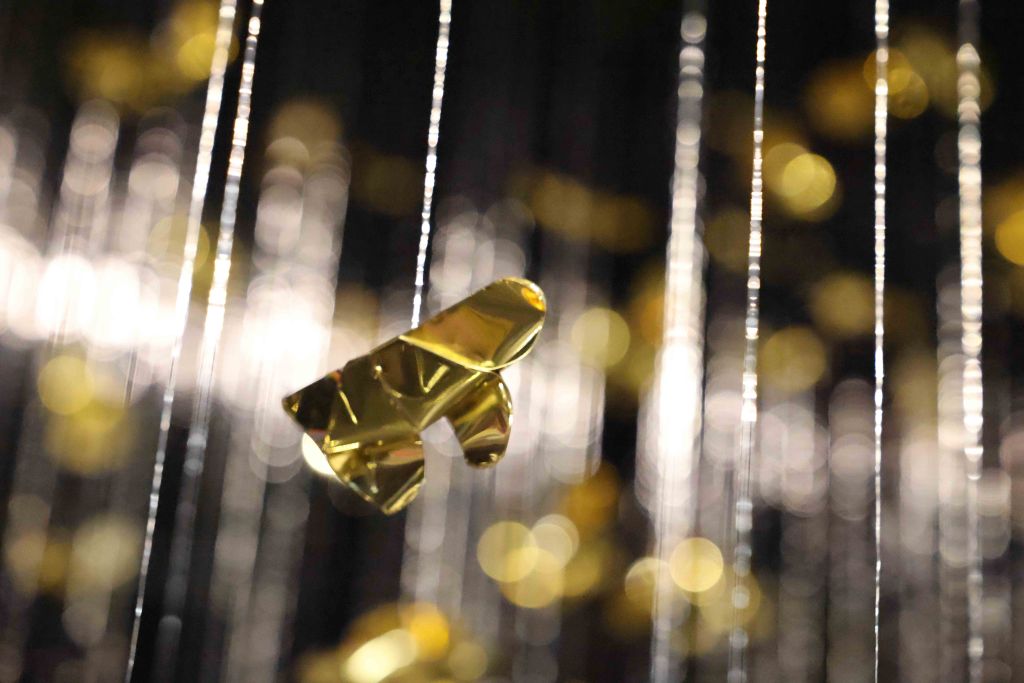
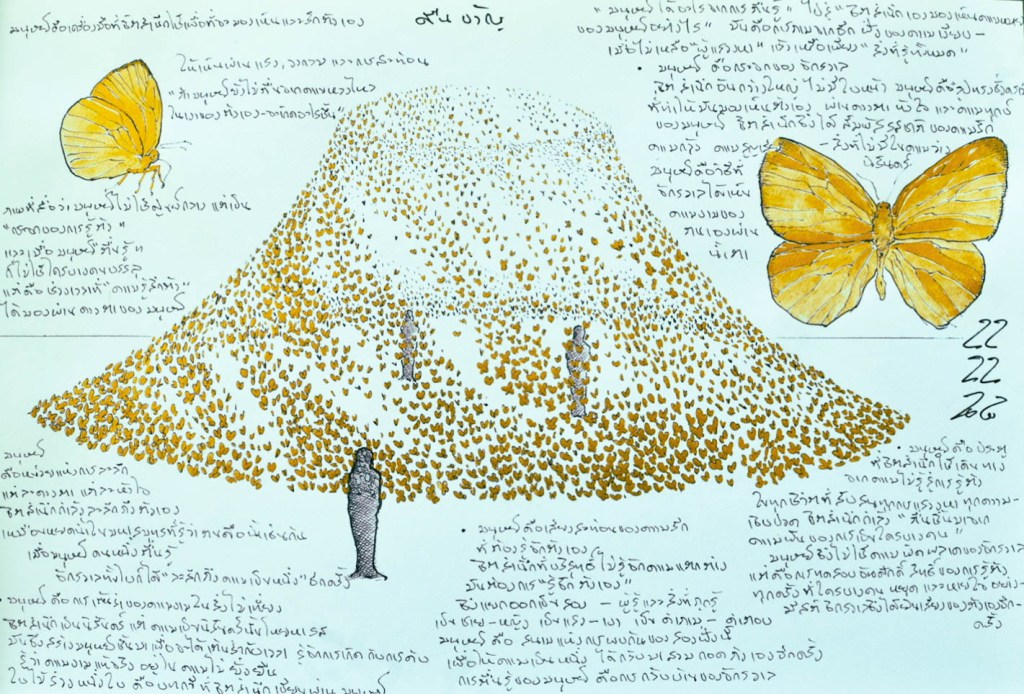
“ผีเสื้อ” ถูกเลือกใช้เป็นสัญลักษณ์ศูนย์กลางของผลงาน โดยในความเชื่อของกลุ่มชาติพันธุ์ไท-ไต ผีเสื้อคือร่องรอยของจิตวิญญาณหรือดวงวิญญาณบรรพบุรุษที่ยังคงเวียนว่าย ศิลปินหยิบยืมสัญลักษณ์นี้มาเป็นอุปลักษณ์ของการเปลี่ยนผ่านและการกำเนิดใหม่สองวาระ จากหนอนที่อิงแอบกับผืนดินและข้อจำกัดของโลกวัตถุ สู่การสลายตัวในรังไหม และอุบัติขึ้นใหม่เป็นผีเสื้อที่โบยบินสู่ท้องฟ้า ผีเสื้อจึงทำหน้าที่เสมือนสะพานเชื่อมระหว่างผืนดินและแผ่นฟ้า ดุจแสงระยิบระยับบนผิวน้ำที่สะท้อนทั้งความสูงส่งเบื้องบนและความลึกล้ำเบื้องล่างในขณะเดียวกัน
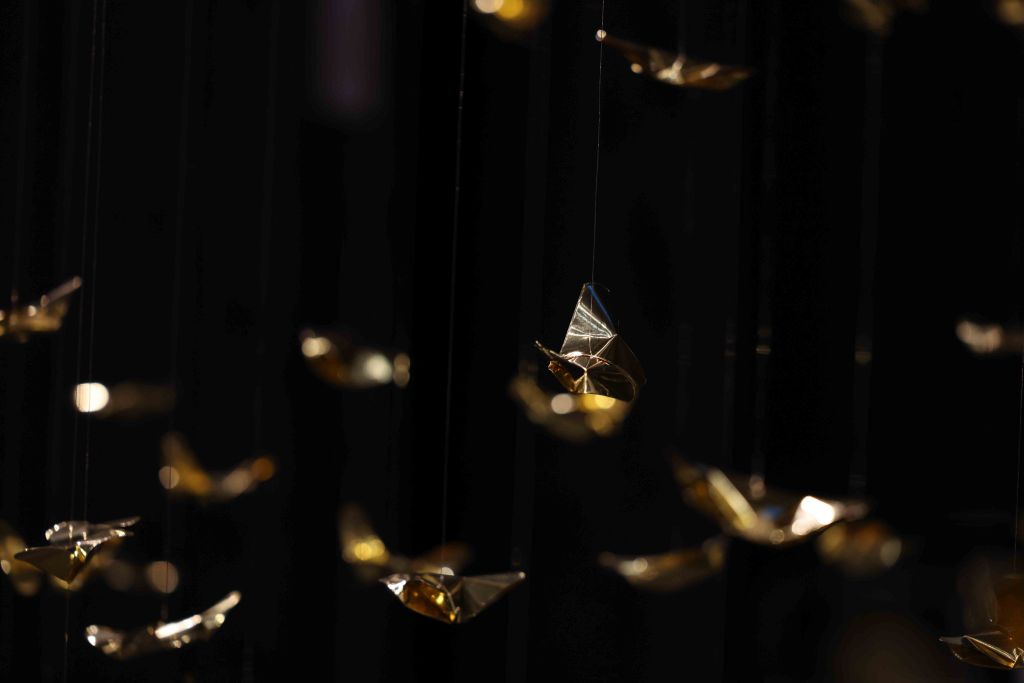
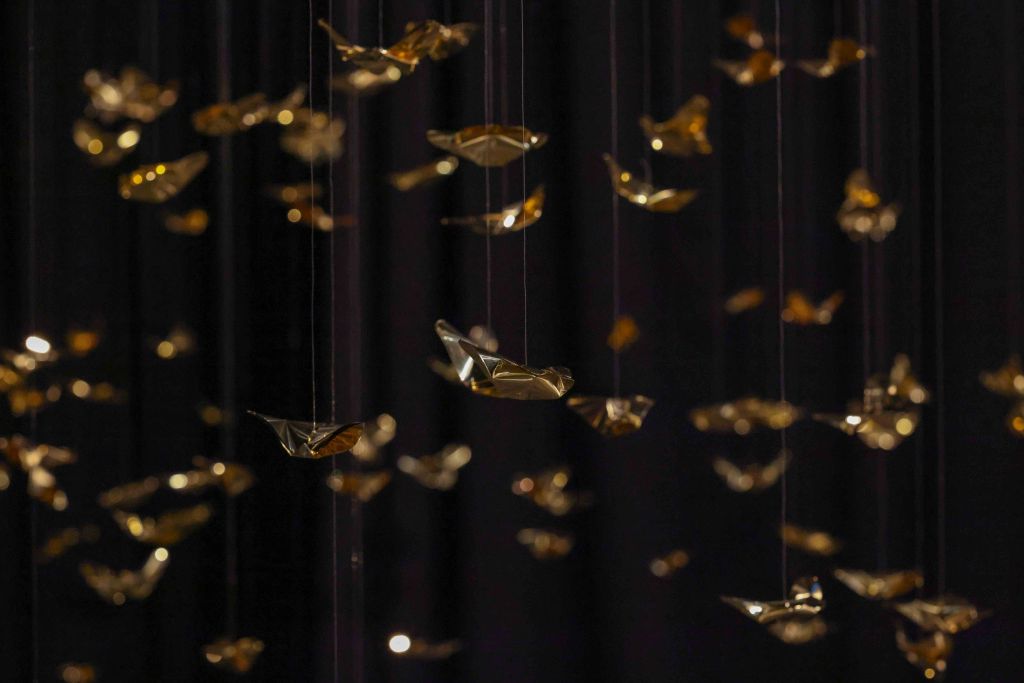
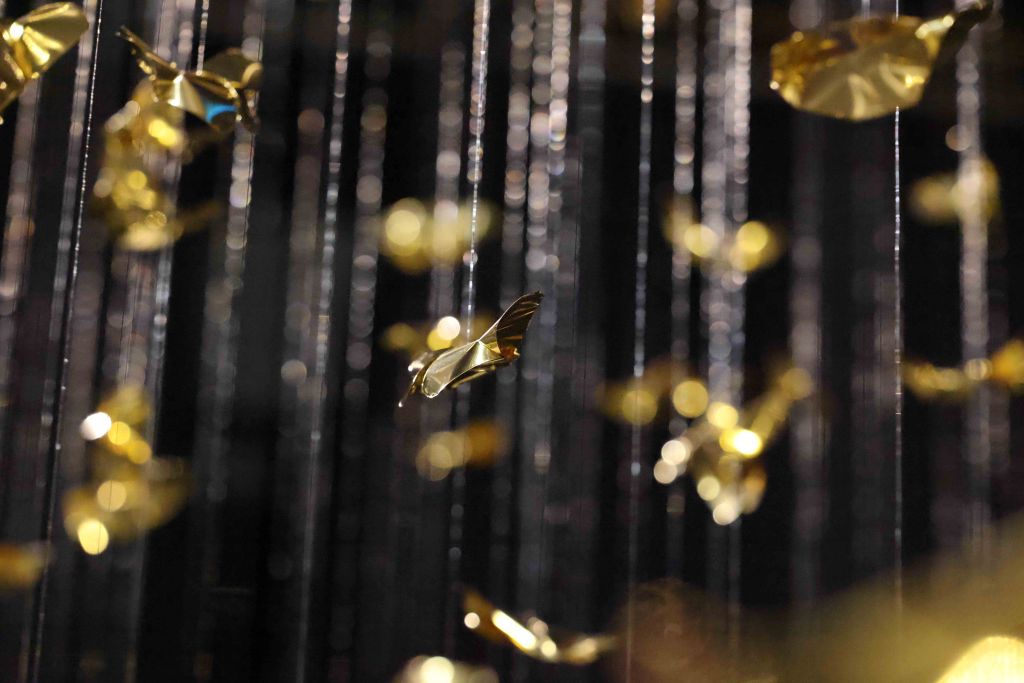
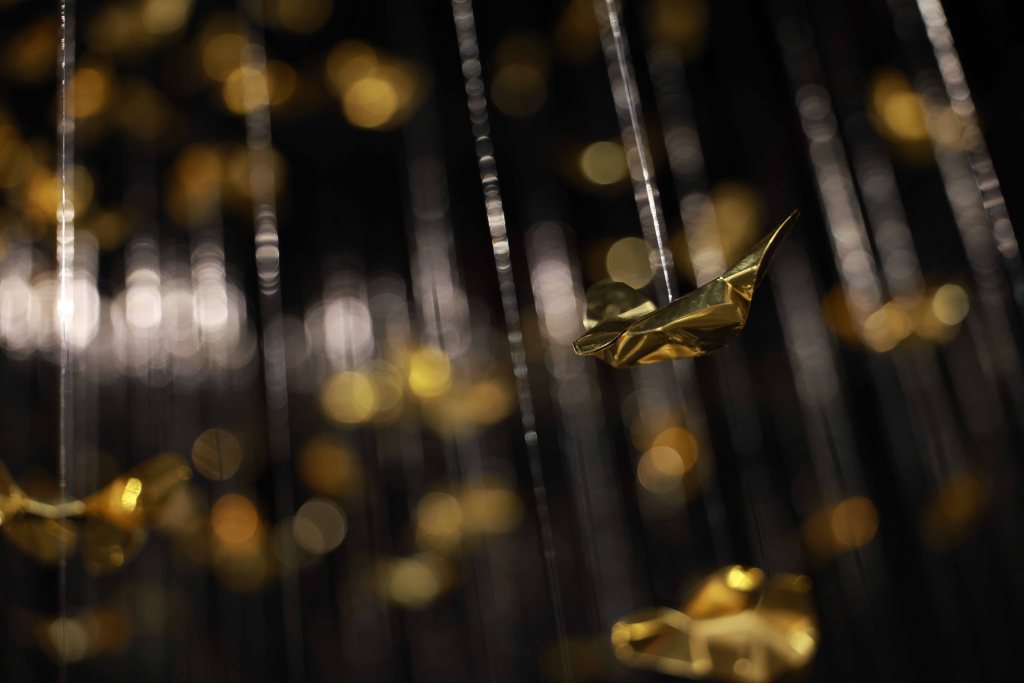
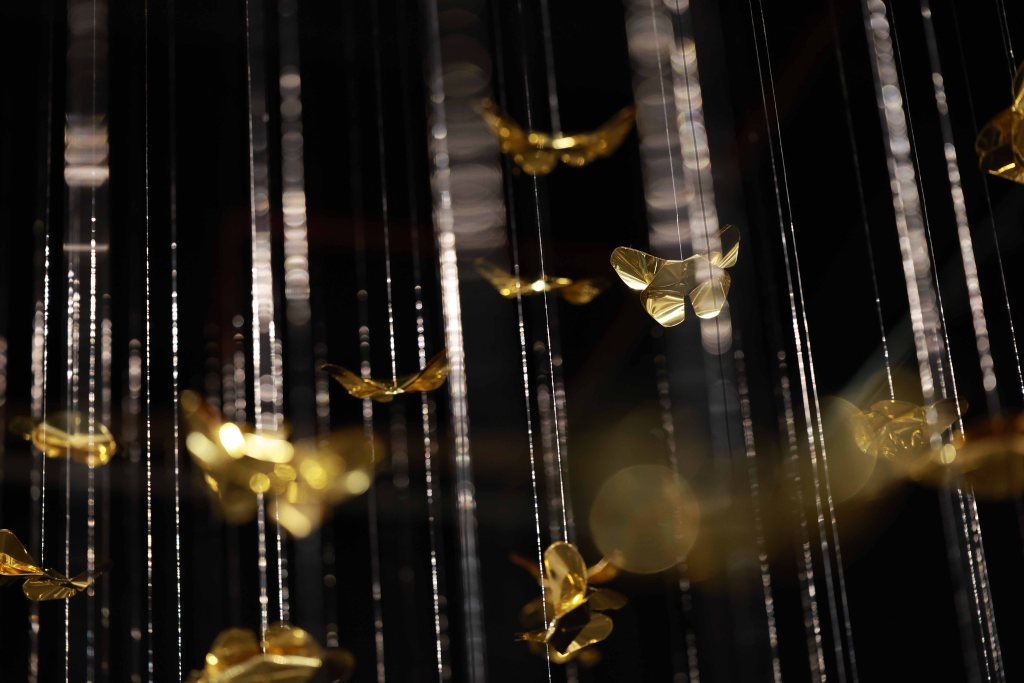
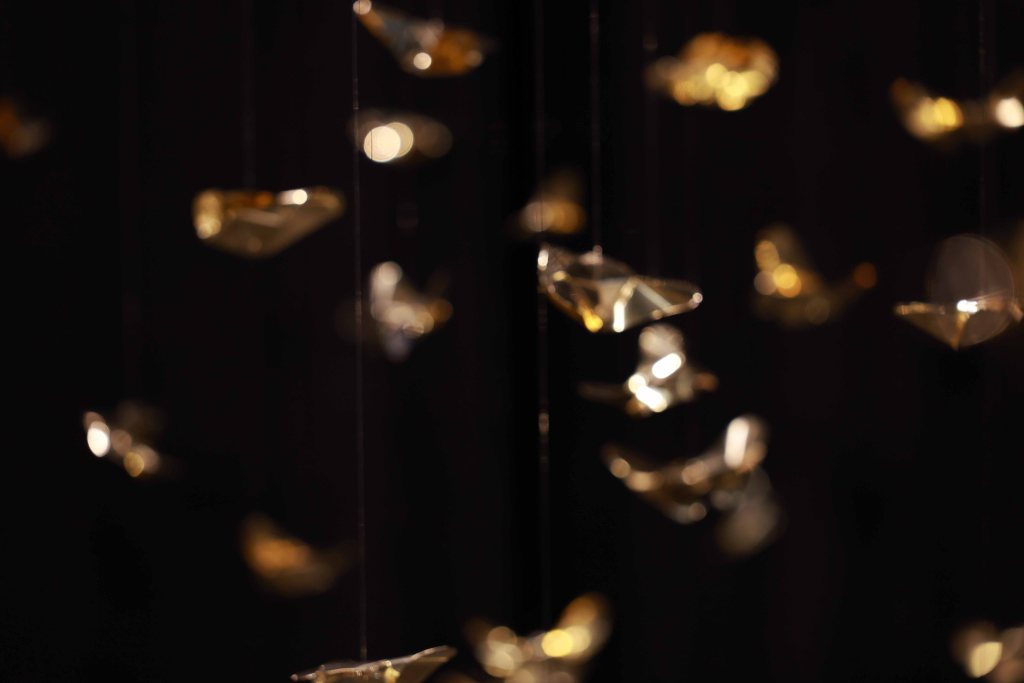
กลุ่มผีเสื้อทองเหลืองที่แขวนลอยอยู่นี้ จำลองห้วงขณะแห่งการเปลี่ยนผ่าน (Metamorphosis) จากความมืดมนสู่วิถีที่เปล่งประกาย แสงที่ตกกระทบสร้างมิติแห่งเงาและจังหวะการเคลื่อนไหวที่ราวกับมีชีวิต เสมือนพิธีกรรม “เรียกขวัญ” (Su Khwan) ที่นำพาพลังงานที่กระจัดกระจายกลับคืนสู่ศูนย์กลาง ซึ่งมิใช่เพียงการเรียกคืนดวงวิญญาณในทางตรง แต่คือการสานสายใยแห่งความสัมพันธ์ระหว่างตนเอง ชุมชน และบริบทแวดล้อมที่เคยขาดสะบั้นให้กลับมาเชื่อมต่อกันอีกครั้ง ปรากฏการณ์นี้สะท้อนล้อไปกับแนวคิดความพัวพันเชิงควอนตัม (Quantum Entanglement) ที่ชี้ว่าอนุภาคซึ่งเคยมีความสัมพันธ์กัน จะยังคงเชื่อมโยงถึงกันเสมอไม่ว่าจะอยู่ห่างไกลเพียงใด
ท้ายที่สุด ศิลปินหวังว่า Golden Metamorphosis จะก้าวข้ามการเป็นเพียงการแสดงออกทางสุนทรียศาสตร์ สู่การเป็น “พิธีกรรมทางศิลปะ” ที่มุ่งประสานรอยร้าวระหว่างร่างกายและจิตใจ ผลงานชิ้นนี้เชื้อเชิญให้ผู้ชมได้ใคร่ครวญถึงความสัมพันธ์ระหว่างตนเองกับโครงข่ายความทรงจำที่มองไม่เห็น พร้อมทั้งตระหนักว่า กระบวนการเยียวยาที่แท้จริงมิใช่การย้อนกลับไปสู่สภาพเดิมทุกประการ หากแต่เป็นการประกอบสร้างตัวตนขึ้นใหม่จากร่องรอยแห่งประสบการณ์ ขวัญที่เรียกกลับคืนมาอาจไม่เหมือนเดิมในทุกมิติ แต่นั่นคือแก่นแท้ของการเปลี่ยนผ่าน สู่การกำเนิดใหม่ที่สมบูรณ์และงดงามยิ่งกว่าเดิม ในโลกที่อนุภาคและจิตวิญญาณได้หลอมรวมกลับคืนสู่ความเป็นหนึ่งเดียว
“Golden Metamorphosis” is a suspended installation sculpture that explores the process of healing and the reintegration of fragmented souls back into a state of “Oneness.” This artwork questions the concepts of fragmentation and rebirth as fundamental conditions of human existence, utilizing an artistic language that merges hand-folded brass sheets with the philosophy and profound wisdom of the Lanna culture.
The core inspiration for this piece stems from the artist’s personal experience with Panic Disorder. This psychological state is likened to the scattering and shattering of “Khwan”—the vital life force or fragments of the soul in Lanna belief. The artist translates the concept of the “Body as Archive” through 320 hand-folded brass butterflies, metaphorically representing the 32 Khwan of a human being scattered across 10 directions (the eight cardinal and ordinal directions, the heavens above, and the earth below). Each butterfly serves as a vessel for the memories and emotions deeply embedded within muscles and the nervous system. This aligns with the theory of Embodied Cognition, which posits that memory resides not only in the brain but is inscribed throughout every cell of the body. Each butterfly thus represents a once-shattered fragment of experience that, when woven back together by barely visible threads, forms a new structure that is simultaneously fragile and resilient.
The “butterfly” is chosen as the central symbol of the artwork. In the beliefs of the Tai ethnic groups, butterflies represent the lingering traces of spirits or ancestral souls. The artist employs this symbol as a metaphor for transition and a dual rebirth from a caterpillar bound to the earth and the limitations of the material world, through its dissolution in the chrysalis, to its emergence as a butterfly soaring into the sky. The butterfly thus acts as a bridge between the earth and the heavens, much like the shimmering light on the water’s surface that simultaneously reflects the celestial heights above and the profound depths below.
This suspended cluster of brass butterflies captures the precise moment of transition (Metamorphosis) from darkness to a radiant path. The interplay of light creates dimensions of shadow and a rhythm of movement that feels inherently alive. It acts as a “Su Khwan” (soul-calling) ritual, guiding the scattered energy back to its center. This is not purely a literal summoning of the spirit, but rather the reweaving of severed connections between oneself, the community, and the surrounding environment. This phenomenon elegantly parallels the concept of Quantum Entanglement, which suggests that particles once connected remain inextricably linked, regardless of the vast distances between them.
Ultimately, the artist hopes Golden Metamorphosis will transcend boundaries of aesthetic expression to become an “artistic ritual” aimed at mending the rift between body and mind. The piece invites viewers to contemplate their relationship with the invisible network of their own memories, recognizing that true healing is not a flawless return to an original state, but rather the reconstruction of the self from the traces of experience. The reclaimed Khwan may not be identical in every dimension, but that is the true essence of transition—a rebirth into a state even more complete and profound, in a world where particles and spirit are once again reunited into Oneness.
 WATHIT SEMBUT